Uninvited Guests Showed Up at the Wedding Expecting to Be Seated — Then the Couple Said the List Was Final and Meant It
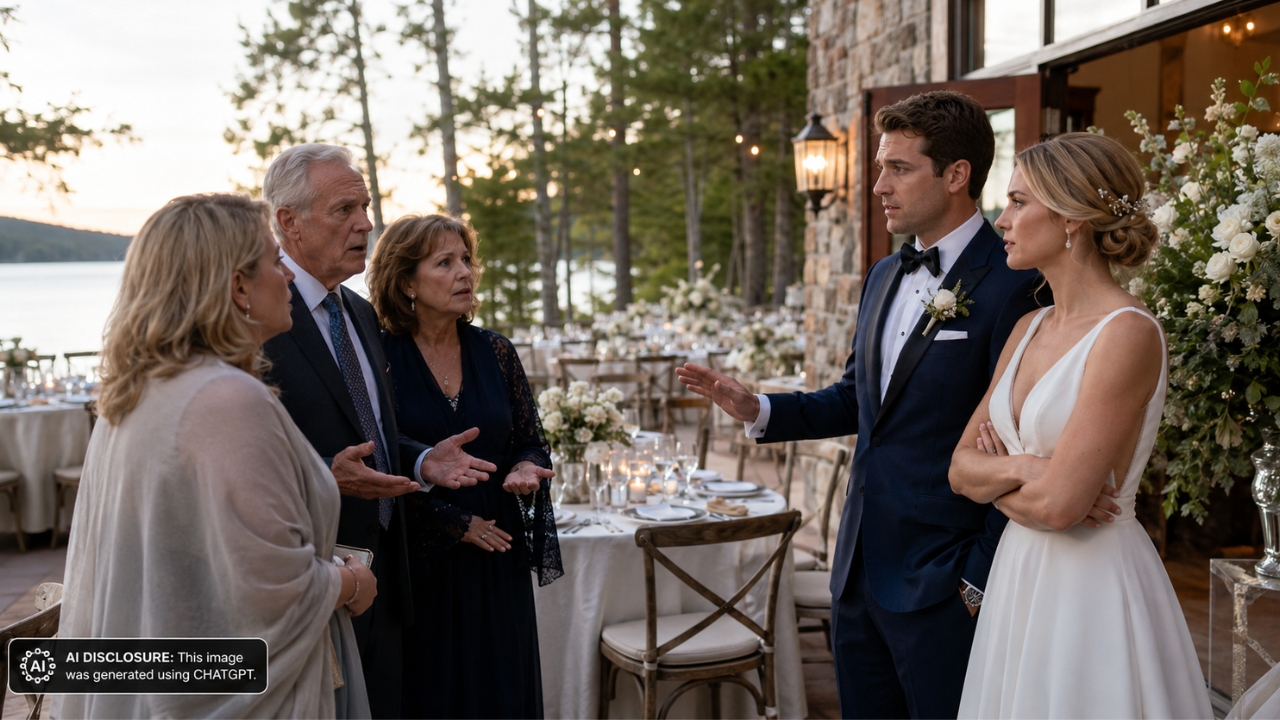
Photo credit: AI-generated image created using ChatGPT. Illustrative only.
Two weeks before her wedding, a 23-year-old bride thought she was in the home stretch: final headcounts sent, destination-ish logistics locked, and one last deep breath before heading to northern Michigan to get married. Then her phone buzzed at 5 a.m. with a text from her dad that instantly turned “almost there” into “are you serious right now?”
The message was basically this: sorry, but some extra relatives are coming… and could she just add a whole new table at the reception for them?
The guest list was already set in stone
The couple had been planning for a year and a half, and because most of their family was traveling from out of state, they were treating details like deadlines. Final numbers had already gone to vendors. Seating, catering, rentals—everything was based on the list they’d committed to.
They even tried to make it extra clear for anyone tempted to treat the weekend like an open-invite family reunion. On their wedding website, they stated that uninvited guests couldn’t be accommodated. Not “probably can’t,” not “we’ll see,” but can’t.
So when the bride’s sister—also her maid of honor—noticed extra names floating around in family weekend plans, it immediately felt off. It wasn’t one plus-one oversight. It was six or seven extra people: her dad’s cousins’ kids, who weren’t invited to the ceremony or the reception.
The 5 a.m. text put the bride in an impossible position
When the dad reached out before sunrise, he didn’t frame it like a question that was up for discussion later. It landed like a problem that needed solving now. He apologized for “bringing uninvited people,” then asked if she could add an extra table.
And here’s where it gets sticky: he also emphasized that he was paying for that part of the wedding and would cover the extra cost. On paper, that might sound like a simple fix. In real life, it can feel like someone trying to purchase a yes.
The bride admitted she’s not good with confrontation, especially with family. But she still told him no—she would not be contacting catering or rentals. The list was final. And she and her fiancé were firm.
Her dad didn’t drop it right away. He kept pushing, like the issue was just logistical and not, you know, wildly disrespectful. The couple’s position stayed the same: no extra table, no last-minute guest expansion, no scrambling two weeks out because extended relatives decided to treat the invite list as a suggestion.
It wasn’t just about money—it was about the message
Even if the dad truly was willing to pay, the couple’s no wasn’t about the price tag. It was about what happens when you reward the behavior. If people show up uninvited and it works, then the next family event becomes a game of “bring whoever and see what happens.”
There’s also the social reality of a wedding reception. Tables aren’t just furniture. Seating is names, place cards, counts, meals, staffing, and space. Adding a “surprise” table means the couple is now hosting people they didn’t choose to host, on a day they’ve spent a year and a half planning.
And emotionally, it hits a nerve. These weren’t last-minute emergencies or someone escaping a bad situation. It was relatives who weren’t invited, apparently planning to attend anyway, with the expectation that the couple would make it work. That kind of assumption can make a bride feel like her wedding is being treated like a family obligation instead of her actual wedding.
So the couple did the thing people always say they’ll do, but rarely actually do when family pressure shows up: they held the line.
Then the story swerved into “wait… what even happened?”
After the bride shared what was going on in the original post, she posted an update that changed the tone. What looked like a full-on wedding crash situation turned into what she called “a metric ton of miscommunication” between her, her fiancé, her dad, and her mom.
She didn’t share every detail because emotions were still running high, but she said things were being smoothed over and that it looked like everything would work out okay. That said, she also didn’t pretend it was no big deal. She and her fiancé were still hurt by her relatives’ actions, even if the logistical crisis ended up not being as catastrophic as it first sounded.
Later, she added more context: her dad wasn’t paying for the whole wedding. Her fiancé’s parents and her mom contributed too. (Her parents are divorced, which matters here because it turns out her mom and dad were having their own conversations behind the scenes.)
The heart of the miscommunication, according to her edit, was that her parents had separately talked about the issue and came to an agreement. But then her dad came to her afterward, making it sound like he needed her permission and that she needed to fix it.
So she got yanked into a mess that—apparently—had already been “handled” in some way, even though no one had actually told her that.
The “uninvited guests” problem wasn’t as simple as it sounded
In her final clarifications, the bride explained that they had a buffer built into catering and the venue already had extra seats outside the main dining area. So in a true “unexpected scenario,” they weren’t completely doomed.
Her mom’s phrasing made it sound like this was always part of the plan: seating available if something strange happened. Which, in wedding terms, is basically the equivalent of keeping a spare phone charger in your purse—just in case.
That’s also why the bride summed it up bluntly: her dad made a non-issue into an issue. Whether he panicked, tried to take charge, or felt embarrassed and wanted the couple to smooth it over, the result was the same. He woke up the bride at 5 a.m. to pressure her into changing plans, even though the event had some built-in flexibility.
And honestly? Even with a buffer, it still stings. Because the part that hurts isn’t always the chairs. It’s the entitlement. It’s relatives deciding they’re coming, and someone else putting the stress of that decision on the couple getting married.
A little comic relief, but the feelings were real
Buried in the edit was one detail that felt like the only breath of air in an exhausting morning: they’re not hiring security, but the bride’s stepdad offered to wear a suit of armor to scare away any party crashers. She joked that it wasn’t on theme, so they had to nix the plan.
It’s funny, but it also says a lot. Somebody in her corner immediately understood the vibe: this was stressful, it felt invasive, and it needed to stop. Even if the ultimate resolution was more administrative than dramatic, the initial moment was still a gut punch.
In the end, the couple didn’t cave on principle, and they didn’t rush to rearrange their wedding just because someone else created a problem. The logistics may have had a hidden cushion, but the couple’s point still landed: invitations matter, and “we already finalized everything” isn’t a debate prompt—it’s the answer.