Her In-Laws Were Planning to Show Up at the Hospital Without Permission — Then She Made Sure There Was Nothing for Them to Walk Into
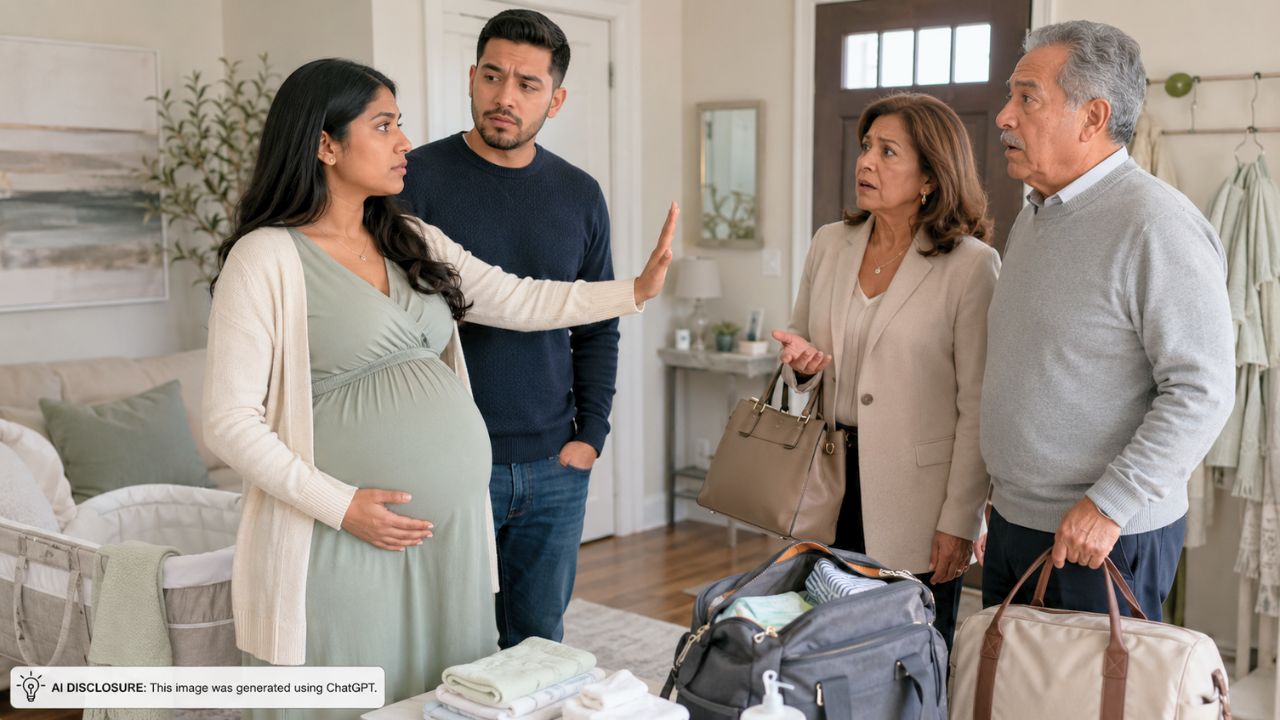
Photo credit: AI-generated image created using ChatGPT. Illustrative only.
She’s months away from giving birth, but the hospital scene was already playing on a loop in her head: relatives hovering, expectations flying, and a brand-new baby becoming a group project before she’s even stitched up. For this mom-to-be, the worry wasn’t just germs or exhaustion. It was the idea that people who already don’t like her might try to insert themselves into one of the most vulnerable days of her life.
At 27, pregnant with her first baby and due in December, she wanted a calm start. Her husband, 26, was on board in theory. But both sets of parents had the same request: they wanted to be at the hospital when the baby was born.
And that’s where things got messy—because her living situation was about to change in a way that made “fair” feel almost impossible.
The plan was simple… until their address changed
Originally, she had what a lot of new parents daydream about: a full month with no visitors. A newborn bubble. No passing the baby around, no surprise drop-ins, no pressure to host when you’re leaking, bleeding, and barely sleeping.
Her reasoning was straightforward: illness prevention. December is cold-and-flu season. Newborns are tiny. She didn’t want to take chances.
But then reality showed up with a moving truck. In September, she and her husband planned to move into her parents’ house for financial reasons while he finished school—something that could take one to two years.
Suddenly that “no one for one month” rule didn’t make sense in the same way. If she was living with her parents, they’d obviously be around the baby from day one. And honestly? Part of her liked that idea. She expected their help to be “great,” and she even considered a compromise—asking her mom not to get close to the baby’s face while still being hands-on around the house.
Then came the uncomfortable part: explaining it to his parents
The second she pictured her parents being around the baby while her in-laws were told to wait a month, she could feel the awkwardness tightening in her chest. It wasn’t that she wanted to punish them. But she also didn’t want a hospital waiting room full of people she didn’t feel safe with.
And she admitted there’s history there. Her in-laws already dislike her, and she believes it’s partly because of a language barrier and partly because of how she comes across. She described herself as “very skittish/aloof due to past trauma.” So even when she’s trying, she’s aware she might not read as warm and welcoming.
That’s the kind of detail that changes the temperature of the whole story. Because it means this isn’t just a scheduling question. It’s about walking into birth already braced for judgment.
Her mother-in-law had started asking about “hospital plans,” which put her in a spot: say the truth and risk a fight, or stay vague and risk people showing up anyway.
Fairness started competing with survival mode
She could see both sides, which is exactly why she was spiraling. On one hand, she worried it would be unfair to exclude his parents while letting hers have access.
On the other hand, she wasn’t choosing her parents because they “deserved” the baby more. She was choosing them because she’d be living in their home, and because postpartum is not a time when you want to be negotiating every little thing from scratch.
In her mind, there were two options, and neither felt great. Either:
1) Her parents are around because they’re housemates, and the in-laws wait a month… which looks like favoritism.
Or 2) She enforces the one-month rule on everyone, including the people she’s literally living with… which feels unrealistic and might even make the home situation tense right when she needs support.
And hovering over it all was the hospital issue. Both sets of parents had “expressed wanting to be at the hospital.” Not “we’ll wait for your invitation.” Wanting. Expecting. Claiming space.
She realized the hospital doesn’t have to be a free-for-all
Even before she landed on a final plan, one part was clear: she didn’t want to be caught off guard. Because once people are in the waiting room, once they’ve taken off work, once they’re texting “we’re here,” it’s so much harder to say no.
That’s the trap a lot of new moms recognize immediately. If you don’t set the tone early, someone else will.
So she went looking for perspective and posted the situation publicly in the original post, asking whether she’d be wrong to keep her in-laws away from the newborn while allowing her own parents to be around.
She wasn’t writing like someone plotting revenge. She sounded like someone trying to avoid a postpartum power struggle. She repeatedly circled back to the same fear: “I’m not sure what to say yet, and don’t want to upset them.”
The update: she dialed it back and chose a more practical rule
In the end, she made a noticeable pivot.
After reading the responses she received, she decided she’d been feeding her anxiety a little too hard. “I agree I’m probably watching too much Tiktok,” she wrote in an edit, acknowledging how easy it is to get swept up in scary postpartum content and strict rules that don’t always fit real life.
She also admitted that while a month of no visitors sounded nice, it wasn’t very realistic considering she won’t even have her own place. When you’re living in someone else’s home, you can’t exactly pretend they aren’t there.
So instead of trying to enforce a blanket ban on contact, she decided to shift toward precautions: asking everyone to wash their hands and be careful while still being able to see the baby.
It wasn’t the dramatic, door-slam kind of ending. It was the kind of ending that happens when someone realizes they’re about to make their own life harder in the name of “fair.”
And the real question still lingering: who gets access to her on birth day?
Even with the updated plan, one piece of tension doesn’t magically disappear: the hospital.
Because “wash your hands” solves the germ worry, but it doesn’t solve the emotional part—her in-laws already dislike her, she’s anxious about being perceived as cold, and she doesn’t want to spend labor managing other people’s expectations.
The smartest part of her thinking was that she asked the question early, months before her due date. She still has time to decide what she wants the delivery day to look like, and to communicate it in a way that doesn’t invite a debate in the parking lot.
For now, she’s choosing something many first-time parents eventually choose: fewer dramatic rules, more realistic safety steps, and a little more trust in her ability to protect her peace when the day actually comes.