Her Mother-in-Law Came to Stay and Expected to Be Hosted Like a Guest — Then She Made Clear She Wasn’t the Help

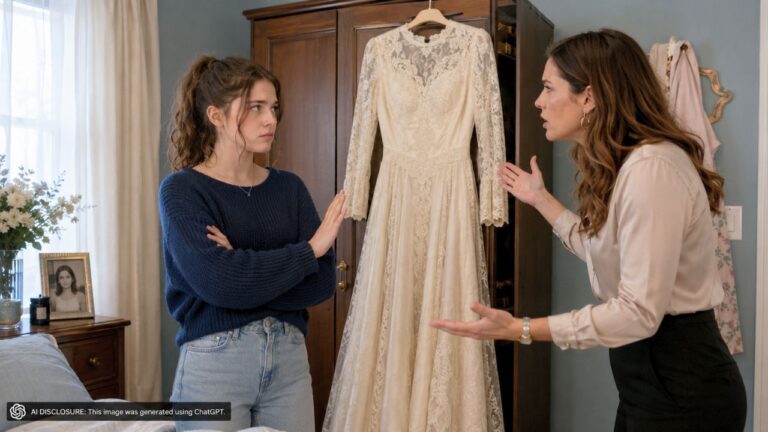
Photo credit: AI-generated image created using CHATGPT. Illustrative only.
By the time you’re heavily pregnant with twins, chasing a toddler, and running on fumes, “help” is supposed to look like someone folding laundry without being asked. Not someone standing over your shoulder, rating your cooking, and treating you like you’re auditioning for the role of wife in your own home.
That’s the reality a 21-year-old mom described when she shared what happened after her husband insisted his mother move in. What started as a family decision meant to support an older parent who’d recently lost her husband quickly turned into a daily power struggle that left the pregnant mom crying—and finally refusing to lift a finger for her mother-in-law at all.
It was supposed to be support, not a takeover
The mom said she was already stretched thin: she’s heavily pregnant with twins and also has a 2-year-old son. Her husband, 27, pushed for his mom to move in after the mother-in-law lost her husband about six months earlier. Between grief and age, he felt she needed to be with family.
But the wife wasn’t on board from the start. She described her mother-in-law as extremely nitpicky, constantly finding something wrong with how she does things. Even before the move-in, she already felt judged.
There was also a cultural layer baked into the tension. The wife said she grew up in the West and comes from a different culture than her mother-in-law, who is South Asian. She tried to respect her mother-in-law’s culture, but said her own background got mocked in return.
Once the mother-in-law moved in, the dynamic shifted fast. Instead of feeling like a shared home, it began to feel like the wife was being managed—and corrected—inside her own kitchen.
Daily life turned into a never-ending test
The wife said her mother-in-law started ordering her around “like I am her slave,” and at first she tried to keep the peace. She was doing her best to please her because, in her mind, this was still her husband’s mother and someone who was grieving.
It didn’t matter. “No matter what I do I can’t,” she wrote, saying her mother-in-law found fault with everything. That constant criticism didn’t stay at an eye-roll level; it wore her down until she ended up in tears.
Cooking became a performance with a trapdoor underneath it. Her mother-in-law requested a dish from her homeland—something the pregnant wife had never even eaten before—then refused to help prepare it. The wife spent all night researching it anyway, trying to get it right.
When she served it, her mother-in-law took one bite, said it was awful, and threw the whole plate out.
Cleaning wasn’t any safer. The mother-in-law would watch her and tell her she wasn’t cleaning correctly, then go for the deepest cut: she “doesn’t understand how her son could marry someone who doesn’t even know how to be a wife.”
At that point, it wasn’t about housekeeping. It was about control—and making sure the wife knew she was failing at the role the mother-in-law had assigned her.
She wasn’t being treated like family—she was being treated like staff
The requests kept coming. The wife said her mother-in-law constantly ordered her to go to the store, clean up after her, and cook for her, only to turn around and say it was done horribly.
And because she’s pregnant and exhausted, the emotional cost was stacking on top of the physical reality of carrying twins and caring for a toddler. She wasn’t just dealing with snide comments; she was dealing with constant demands in a season where her body is already working overtime.
Over time, she stopped feeling like this was a temporary adjustment period and started feeling like this was the new normal. Every day came with another criticism. Every attempt at peacekeeping came with another insult.
So she finally said the thing so many people think but don’t say out loud: she was done.
The moment she said “enough,” the insults got louder
The wife told her mother-in-law she was no longer doing anything for her until she learned to treat her with respect. She also reminded her that she isn’t some outsider passing through—she’s the mother of her grandson and her unborn granddaughters, which makes her family.
That didn’t land as a reality check. It lit a fuse.
Her mother-in-law insulted her and told her that women “out here” don’t know how to respect their elders. She said she was disgusted her son chose her. It wasn’t subtle. It was a full rejection of who the wife is, where she’s from, and the place she holds in the family.
Then the mother-in-law did what she’d apparently done before: she called the husband and framed it as the wife being disrespectful.
The wife said this pattern was familiar—any time she tried to ask to be treated better, her mother-in-law would run to her husband and make it sound like the wife was the problem. And this time, it worked again.
Her husband took his mom’s side—without hearing her out
When the husband got involved, the wife says he sympathized with his mom based on her version of events and didn’t even listen to his wife. Instead of asking what led up to the blowup, he focused on smoothing things over for his mom.
He was upset and told his wife she should be putting more effort into mending the relationship, especially because his mother is grieving.
But the wife wasn’t talking about one bad day. She said she had brought his mother’s behavior to his attention multiple times. Each time, he downplayed it and said his mom would “warm up” to her soon enough.
According to her, she hasn’t. If anything, the disrespect has gotten more comfortable, more routine—like the mother-in-law realized she could push and push and still have her son back her up.
That’s where the standoff sits: a pregnant woman at her limit, a mother-in-law who expects to be served while criticizing the service, and a husband who wants peace but is trying to buy it with his wife’s labor and patience.
She asked if she was wrong for refusing—and the answer felt clear
In the original post, the wife asked if she was wrong for telling her mother-in-law she’s done doing anything for her. She didn’t describe screaming or revenge, just a line in the sand: no more cooking, no more cleaning, no more errands for someone who treats her like a disappointment on a leash.
The post itself labeled her “Not the A-hole,” reflecting how the situation reads even from her own retelling: she’s pregnant, already parenting a toddler, and being worn down by a live-in critic who refuses to offer basic kindness. The wife’s frustration isn’t about disliking her mother-in-law’s culture or ignoring grief—it’s about being treated like she exists to serve and be corrected.
And the hardest part might be the piece she can’t fix by simply refusing to cook: her husband’s refusal to fully see what’s happening inside their home. If he continues to frame this as his wife needing to “try harder,” the real problem won’t be a dirty dish or a badly made recipe. It’ll be the message that her comfort matters less than his mom’s approval.
For now, she’s holding her ground. She’s exhausted, pregnant, and finished performing. And unless something changes—especially on her husband’s side—it doesn’t sound like this living arrangement can stay the way it is without breaking something much bigger than a plate.