Her In-Laws Assumed They Would All Be at the Hospital for the Birth — Then She Gave the Nurse a Very Short Guest List

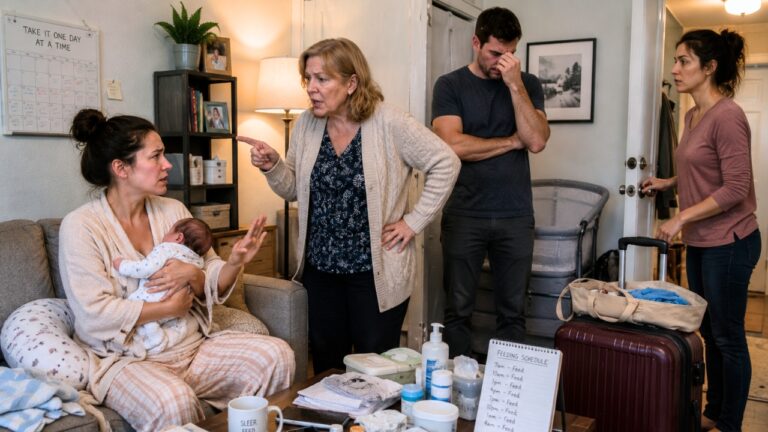
Photo credit: AI-generated image created using CHATGPT. Illustrative only.
She’s due at the end of the year, and instead of obsessing over tiny onesies and baby names, she found herself stuck on one question: who gets to be at the hospital when she gives birth?
For her, the answer felt simple. She wanted her husband, her doula, and her mom there for delivery. Maybe her dad too, but not in the room. What she didn’t want was an audience—especially not from people she’s only recently started speaking to again.
But when she brought it up to her husband, she realized he’d been picturing something very different.
The problem started before the big moment ever arrived
This wasn’t about a last-minute scheduling mix-up or someone misunderstanding visiting hours. Her relationship with her in-laws had already taken a serious hit years earlier.
She explained that three years ago, she had a fallout with her husband’s mom after being disrespected. After that, she didn’t see or talk to them for three years. Not holidays. Not casual check-ins. Nothing.
The only reason they were back in the same space was because she and her husband recently met them for dinner—her first time seeing them in years—to announce the pregnancy. It was basically a fresh start, but a fragile one.
So with birth approaching, she was thinking about what would help her feel safe and calm during delivery. And the idea of his parents waiting around the hospital while she’s in labor felt like too much, too soon.
The guest list was short, and her husband didn’t like it
When she told her husband she didn’t want his parents at the hospital during labor and delivery, she wasn’t trying to keep them away forever. Her plan was for them to come after the baby was born, once “the whole delivery process is over.”
In her mind, that still gave them a chance to meet their grandchild quickly—just not while she was actively in labor, exhausted, vulnerable, and trying to get through something physically intense.
Her husband took it personally anyway. He got bothered and told her his parents are his “greatest support system,” and he would want them there.
And that’s where the whole thing started to sting. Because she wasn’t saying he couldn’t have support. She was saying she didn’t want to give birth with people she doesn’t fully trust hovering nearby.
When “support” starts sounding like pressure
There’s a difference between someone supporting you and someone being present because they think they’re entitled to be. For her, having his parents at the hospital didn’t feel like comfort—it felt like pressure.
After three years of no contact, she wasn’t ready to share one of the most private moments of her life with them in any form, even if they weren’t in the delivery room. Hospitals have a way of turning “we’ll just wait in the lobby” into constant check-ins, texts, and expectations.
She also wasn’t asking for an empty room. She already had a plan for who would be there: her doula, her husband, and her mom. People she feels safe with. People who are there for her, not just the baby.
Still, her husband’s response revealed something important: he wasn’t thinking about what labor is like for the person giving birth. He was thinking about what would make him feel supported while it happened.
That disconnect can turn a simple preference into a bigger argument fast, because it shifts the focus away from the patient and onto the extended family.
She looked for outside opinions and got a clear answer
Unsure whether she was being unreasonable, she shared the situation in the original post, laying out the backstory and her request.
The response she received made her feel validated. In her update, she thanked people for the comments and for backing up what her gut was already telling her: she’s allowed to decide who is and isn’t at the hospital during her delivery.
Even without repeating every reply, her reaction made it obvious what she needed most in that moment—permission to prioritize her own comfort without feeling guilty about it.
Because when your relationship with someone is still shaky, the last place you want to “test” it is in a hospital room while you’re giving birth.
The follow-up conversation changed the tone
After reading the feedback, she brought the topic up again with her husband. And this time, she made it crystal clear that she wasn’t “picking on his parents.” She wasn’t trying to punish them or rehash the past.
She told him she wanted the two of them to have their full attention on their baby and the new journey they were starting together. No extra people. No waiting room expectations. No feeling like she had to be “on” for visitors while she’s still in recovery mode.
She explained that once she’d spent time with the baby, showered, and felt comfortable, then they could let his parents know they were ready to see them.
That detail matters, because it wasn’t just “not now.” It was a clear plan: later, when she’s stable, rested, and actually ready to be around people.
According to her update, her husband finally understood. She said she was happy he’d come to see where she was coming from.
A birth plan doesn’t have to include an audience
What made this situation so tense wasn’t just the in-laws themselves—it was the assumption that they would be present for something that isn’t a group event. Her husband saw his parents as comfort. She saw them as added stress, especially after years of distance and a painful falling-out.
In the end, it sounds like the couple landed on a plan that protects her peace while still leaving room for his parents to meet the baby soon after. Not as spectators during labor, but as grandparents invited in when the parents are ready.
And for her, that was the whole point: she’s not trying to control everything. She’s trying to give birth without feeling like she has to manage anyone else’s emotions while doing it.