New Mom Kept a Written Log of Every Boundary Violation — Then She Brought It to the Family Conversation
By the time her baby was six weeks old, Maya had started dreading the sound of her phone buzzing. It usually meant another message from her mother-in-law asking when she could “just stop by,” or a photo from a relative already in the driveway. In the fog of postpartum recovery, it was hard to tell what was normal family excitement and what was a steady erosion of the rules she and her partner had set.
At first, she tried to handle it the way most people do: polite reminders and gentle redirects. But the visits kept happening on days she’d said no, and the “help” came with a lot of taking over. When her partner, Jonah, insisted it was just his family being eager, Maya decided to do something that didn’t rely on anyone’s memory or mood.
The boundaries were simple, but they kept getting tested
Maya and Jonah had agreed on a few basics after their baby was born: call before coming over, no unannounced drop-ins, no kissing the baby, and no posting photos online. They also asked for short visits and masks if anyone had even mild cold symptoms. None of it was extreme, especially with a newborn and a mother recovering from stitches and sleepless nights.
The first violation seemed small. Jonah’s mom showed up with takeout “as a surprise,” then stayed for three hours while Maya tried to nurse behind a blanket. The next time, an aunt arrived with two cousins in tow and let herself in after knocking once, saying the door was unlocked so she assumed it was fine.
Then Maya found a photo of the baby on social media, posted by a cousin with the location tagged. She asked for it to be taken down, and it disappeared, but a week later the same cousin posted another one to a “friends only” story. Each incident came with the same refrain: nobody meant harm, and Maya was being sensitive.
She started writing everything down
The log began as a note in her phone: date, time, who came over, what was said, what rule was broken. Maya told herself it was temporary, just a way to keep from spiraling after an argument. But as the weeks went on, the entries piled up.
She wrote down the day Jonah’s sister arrived while Maya was in the shower and took the baby from Jonah’s arms to “give him a break.” She noted the time a relative insisted the baby “needed” a bottle and mixed formula without asking, then left the half-used can on the counter. She included smaller things too, like people waking the baby to get a better look or refusing to wash their hands because they’d “just washed at home.”
Maya also documented what it cost them: a missed pediatric appointment because an uninvited visit ran long, money spent replacing a door lock after someone “borrowed” an emergency key, and the hours she spent messaging relatives to remove photos. When her anxiety spiked and her doctor suggested reducing stress triggers, the log stopped feeling petty and started feeling like evidence.
The turning point was a safety scare
One afternoon, Maya woke up from a rare nap to the sound of voices in the living room. Jonah was in the backyard taking out the trash, and his mom and an uncle were inside, laughing about how they “didn’t want to wake anyone.” Maya’s stomach dropped when she realized the baby wasn’t in the bassinet.
She found her mother-in-law sitting on the couch with the baby on a pillow, drowsy and slumped, while the uncle took pictures. Maya didn’t scream, but she was shaking as she picked her baby up. The explanation was quick: they’d come by to drop off groceries, the door was open, and they thought they were helping.
That night, Maya told Jonah she was done having the same circular conversation. He said he understood, but he also didn’t want to “make it a big thing.” Maya pulled up her notes and realized it already was a big thing; everyone just benefited from pretending it wasn’t.
She brought the log to a family sit-down
Maya asked Jonah to schedule a conversation with his mom, his sister, and the uncle who kept pushing visits. She insisted it happen somewhere neutral, not their living room, and she wanted it during daylight hours. Jonah agreed, partly because he’d seen how on edge Maya had become and partly because he was tired of being the messenger who got blamed either way.
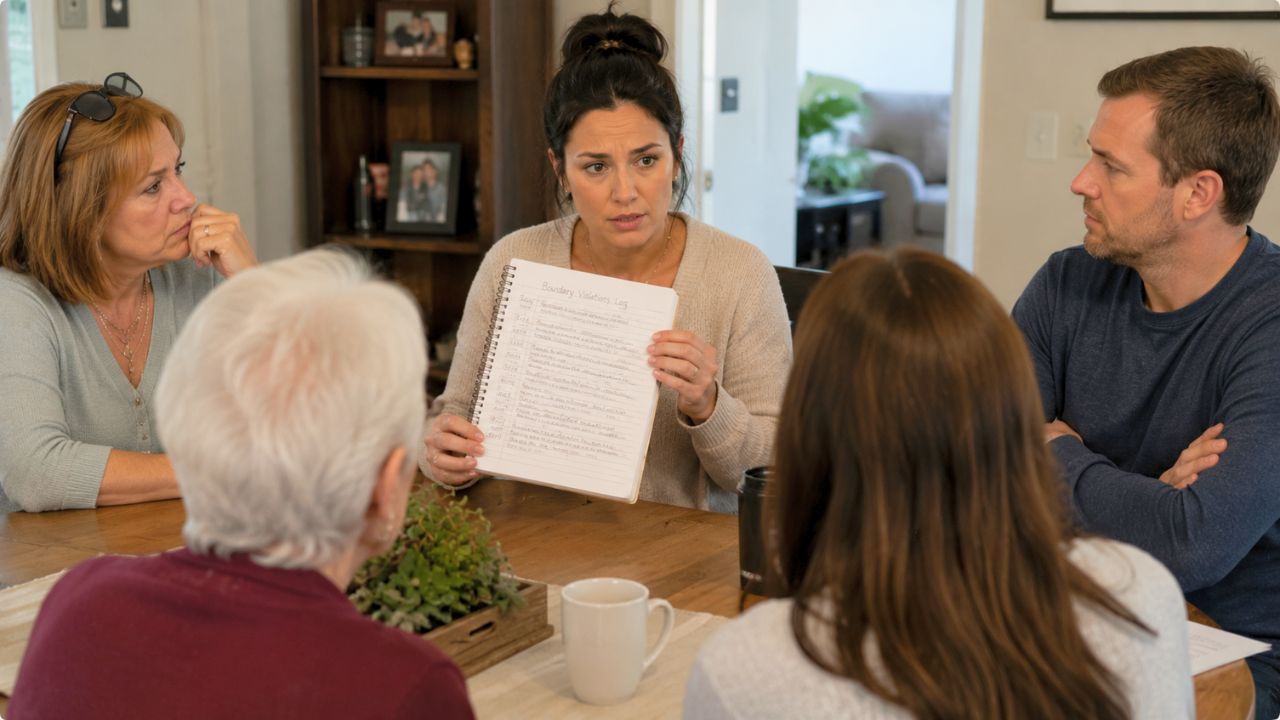
When they sat down, Maya didn’t lead with feelings. She opened a small notebook and started reading dates and descriptions in a calm voice. She kept it short and factual, focusing on specific requests and specific violations: the unannounced entry, the social media posts, the kissing after being told no, the nap-time intrusion, the taking the baby without asking.
The shift in the room was immediate. Jonah’s mom tried to respond to each item like it was a misunderstanding, but it got harder as the pattern became obvious. Jonah’s sister admitted she’d assumed the rules were flexible, and the uncle shrugged like the whole thing was silly until Maya reached the entry about the baby on the pillow and the pictures.
Maya didn’t threaten anyone. She simply said that moving forward, visits would only happen by invitation, the lock had already been changed, and anyone who posted photos would lose access for a set period of time. She also said Jonah would be handling communication with his relatives, in writing, so there wouldn’t be any “you never told me” disputes later.
The fallout spread into housing, work, and daily life
The family conversation didn’t end with a tidy apology. Jonah’s mom left early, crying, and within hours Jonah started getting texts from relatives accusing Maya of “keeping score.” Someone suggested she needed therapy, as if the act of documenting was the problem rather than what she’d documented.
Then there were the practical consequences. A neighbor mentioned to Maya that Jonah’s mom had been knocking on their door when nobody answered, asking if Maya and the baby were home. Maya worried about gossip and, more importantly, about people feeling entitled to information about her schedule.
At Jonah’s workplace, his phone kept buzzing so often that his supervisor pulled him aside and asked if there was an emergency. Jonah started putting his phone on silent during shifts, which only escalated the family’s frustration when they couldn’t reach him. The stress began bleeding into their relationship, with Jonah caught between wanting peace and realizing his reluctance had left Maya to absorb the impact.
Maya also took steps that made the situation feel more serious. She installed a doorbell camera and saved clips of unexpected arrivals. She kept copies of messages where she’d said no to visits, and she started logging not just boundary violations but attempts to argue about them. It wasn’t about revenge; it was about being able to show, if necessary, that this wasn’t a one-off misunderstanding.
People kept coming back to the same advice: document, then reduce access
When Maya vented to a small group chat of other new parents, the reactions were less about family drama and more about safety and leverage. Several people told her the written record was smart, especially when sleep deprivation can blur timelines and make it easier for others to gaslight or minimize. Others said a camera and a new lock were the right next steps, not as punishment but as a reset of expectations.
A few parents suggested keeping all communication in text, not phone calls, and using one clear message that lays out rules and consequences. Some warned that arguing point-by-point can become a trap, because relatives will try to litigate each incident instead of acknowledging the overall pattern. The most practical suggestion was also the simplest: if someone shows up uninvited, don’t open the door.
There were also cautionary notes. People reminded Maya that escalating boundaries can sometimes provoke bigger reactions, like surprise “wellness checks” or relatives trying to recruit neighbors and friends. The consensus was that if the family couldn’t respect a closed door, then the priority had to be protecting the home as a private space, even if feelings got bruised.
By the end of the week, Jonah sent a group message that mirrored Maya’s rules and made it clear he supported them. The responses ranged from icy silence to overly cheerful promises that didn’t address the past. Maya didn’t celebrate; she just felt tired.
The log stayed in her notebook drawer, updated but no longer secret. It wasn’t the kind of parenting tool she expected to need, but it gave her something solid in a situation where people kept trying to rewrite reality. And for now, with the door locked and the rules in writing, the house finally felt like it belonged to the three people who lived there.