Her Mother Wanted To Stay After the Baby — Then the New Mom Said Help Should Not Feel Like Supervision
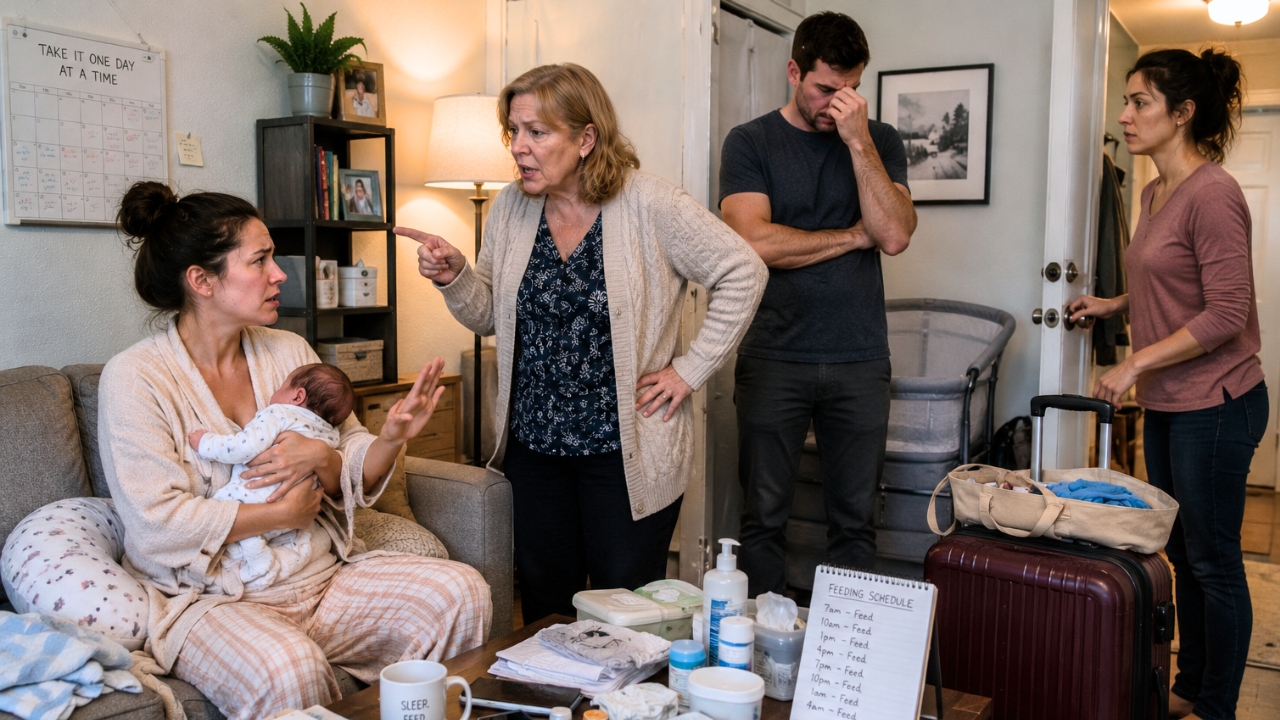
The first night home from the hospital, the new mom expected chaos in the normal ways: cluster feeding, half-slept hours, and learning the baby’s sounds. What she didn’t expect was to feel like she’d traded nurses for a warden. Her mother arrived with a suitcase, announced she’d be staying “until things settle,” and immediately started rearranging the rhythm of the apartment.
The new parents lived in a small two-bedroom rental with thin walls and a neighbor who worked nights. They’d already warned the building manager about the baby and promised they’d keep things as calm as possible. When her mother planted herself in the living room and began narrating everything the new mom did wrong, the stress became less about diapers and more about control.
It started as “support” and turned into a running critique
In the first 24 hours, the mother took over the kitchen, rewrote the feeding schedule on a notepad, and insisted the baby be kept in the bassinet at certain angles. If the new mom shifted positions or tried a different latch, her mother would hover close enough that she could feel eyes on her hands. The comments weren’t shouted, but they were constant.
The new dad tried to smooth it over by staying quiet and focusing on chores. He was also juggling paternity leave paperwork and a supervisor who kept texting questions. The more he disappeared into tasks, the more the new mom felt alone in her own space, with someone “helping” who didn’t actually make anything easier.
By day two, her mother was checking the diaper pail like an inspector, asking why a pacifier was used, and waking her to say the baby’s swaddle looked “unsafe.” The new mom started taking the baby into the bedroom just to breathe. Her mother followed.
The apartment began to feel like a supervised visit
The turning point came over something small: a postpartum pain medication schedule. The new mom had alarms set on her phone, but her mother decided they were “too many” and started reminding her out loud, repeatedly, in front of her partner. When the new mom asked for privacy, her mother said privacy was a luxury and that a “good mom” accepted guidance.
Then came the cleaning. The mother wiped down surfaces with strong-smelling disinfectant and opened windows during a cold snap because she believed the air needed to be “fresh.” The baby’s pediatric paperwork and discharge instructions got shuffled into a drawer. When the new mom asked where they were, her mother said she’d put them “somewhere safe,” and then couldn’t remember where.
Sleep deprivation made everything sharper. The new mom began to feel herself shrinking, asking permission to do basic things like take a shower. When she finally said she wanted her mother to go home after the weekend, her mother treated it like a betrayal and said she wasn’t leaving “while the baby is at risk.”
The fight escalated when boundaries became “disrespect”
On the fourth day, the new mom’s sister stopped by with groceries and found the atmosphere tense. The mother was holding the baby, pacing, and refusing to hand the baby over when asked because the new mom “looked tired.” The sister stepped in, telling her to give the baby back and let the parents decide what they needed.
That’s when the mother made it about authority. She said she had raised children before, that the new mom was being “influenced,” and that she wasn’t going to be pushed out. The new mom took the baby and went to the bedroom, shutting the door. Her mother followed and tried to keep talking through the door, louder this time.
A neighbor knocked to complain about the noise. It was one more thing the new parents didn’t have the energy to deal with, and it made the situation feel public. The new dad asked the mother to lower her voice and leave them space. She told him he didn’t understand, that she was the only one taking things seriously.
The new mom said it plainly: help should not feel like supervision. If she couldn’t be treated like the baby’s parent in her own home, then this wasn’t help at all. Her mother sat down, refused to pack, and said she’d stay “until invited out.”
Real-world pressure made the choice messier
It wasn’t just emotional at that point. The apartment was cramped, and the mother’s extended stay meant higher utility use and more trash, which the building manager had already flagged because the hallway bin kept overflowing. The new dad worried about a complaint turning into a lease issue, especially with a newborn.
There were also safety concerns. The mother kept insisting on old practices the pediatrician had explicitly warned against, and she tried to override the new mom’s preferences on swaddling and sleep positioning. The new mom found herself double-checking the bassinet every time she walked back into the room.
The new parents started documenting things, not because they wanted a war, but because they didn’t trust how the story would be told later. The mother had a habit of calling relatives to “update” them, and the updates sounded like the new mom was unstable. After one call, a cousin texted the new mom asking if she was “okay to be alone with the baby,” which landed like a punch.
By the end of the week, the new dad was back to remote work, trying to take meetings with a crying newborn and a tense standoff in the living room. He started taking calls from the car. The new mom felt trapped, physically healing and emotionally wrung out, with someone in the home who wouldn’t take no for an answer.
Commenters focused on proof, safety, and a clean exit plan
People who heard about the situation through the family grapevine kept offering the same practical advice: stop negotiating in circles and make the boundary enforceable. Several said to put it in writing—one text message stating the visit was over, a deadline to leave, and clear language that the parents were not consenting to an extended stay.
Others emphasized safety and documentation. Keep pediatric discharge instructions visible, take photos of anything moved or thrown away, and write down dates and incidents while sleep-deprived memories are still fresh. A few pointed out that if the mother was telling relatives the new mom was unfit, the new mom should keep her own records in case anyone tried to escalate it into a welfare check or a custody-related complaint later.
Some focused on the lease. If the mother wasn’t on it and had been there past the allowed guest period, they suggested contacting the landlord preemptively with a calm note that a short-term visitor would be leaving by a certain date, to avoid the building treating it as an unauthorized occupant. Others suggested installing a basic door camera or using an old phone as an indoor camera in common areas—less for drama, more for clarity if there was a confrontation or false claims.
A smaller group urged caution about calling police unless things became threatening, since that could raise the stress level and create long-term family fallout. But they also pointed out that refusing to leave someone else’s home crosses a line, and that sometimes a formal “you need to go now” backed by a third party is the only thing that works.
The hardest part was ending it without igniting a bigger conflict
The new mom didn’t want a screaming match in the hallway with neighbors listening. She also didn’t want her mother controlling the narrative to relatives as the “grandmother who was kicked out.” But she wanted her home back, and she wanted the baby’s first weeks to feel calm instead of monitored.
They ultimately chose a controlled approach. The new dad took a half-day off, and the sister returned to be present. The new mom texted her mother in the morning—simple, direct, no debate—saying the visit was over and they would be driving her to her house that afternoon. When her mother tried to argue, they didn’t re-litigate. They repeated the plan.
It still wasn’t smooth. The mother cried, complained about being disrespected, and tried to stall by cleaning and repacking the diaper bag. But with two other adults there, the tug-of-war didn’t turn into a scene. The new mom held the baby in the bedroom while her partner and sister helped gather the suitcase and anything her mother had scattered around the apartment.
After she left, the apartment didn’t magically become peaceful. The baby still woke often, and the new mom still had hard moments. But the air felt different—less watched, less tense. The unresolved part was what came next: family members would hear a version of events, and the mother would likely demand another chance. For now, the new mom’s line stayed simple: support is welcome, but supervision is not.