Grandma Said the Baby Needed “Real Family Time” — Then the Parents Asked Why They Weren’t Invited Too
It started with a simple message from a grandmother who lived fifteen minutes away: she wanted the baby for an afternoon of “family time.” The parents didn’t love the idea of handing over their seven-month-old for a long visit without them, but they’d been trying to keep things calm and cooperative. The couple had been running on little sleep, and part of them hoped a few quiet hours could help.
So they agreed to a short visit on a Saturday, with a clear pickup time and instructions about naps, bottles, and the baby’s new sensitivity to certain formulas. The father packed a diaper bag with labeled bottles, extra clothes, and the baby’s medication for reflux. The mother added one more thing: a note asking that nobody kiss the baby’s face, because daycare had already sent home a warning about a nasty cold going around.
“Just drop her off, we’ll handle it”
The grandmother insisted it would be easier if the parents didn’t stay. She framed it as bonding and tradition, saying the baby needed time with “the real family,” meaning grandparents, aunts, uncles, and cousins. The parents bristled at the wording, but they didn’t want a fight over semantics, especially not in front of the baby.
They offered a compromise: they’d come for an hour, have lunch, then leave so the baby could nap in a quiet room while relatives visited one at a time. The grandmother refused and said she’d planned something special that wouldn’t work if the parents were there. That was the first moment the mother felt something was off.
Still, they dropped the baby off, reminding the grandmother about the formula and the no-kissing rule. They asked for a quick text when the baby went down for the nap. The grandmother smiled, took the carrier, and closed the door before either parent could say anything else.
The photos told a different story
An hour later, the mother’s phone buzzed—not with a nap update, but a picture posted online. It showed the baby passed around in a crowded living room, cheeks flushed, a smear of something on the onesie. In the background were balloons, a big foil banner, and at least ten people packed close together.
The father zoomed in and recognized relatives he hadn’t seen in years, including a cousin who often talked publicly about refusing vaccines. Another photo followed, this one of the baby in a high chair with a tiny taste of cake on a spoon. The parents hadn’t started solids beyond purées, and they’d specifically asked everyone not to feed the baby anything new without them.
Then came the most jarring detail: a group shot where the baby’s face was pressed against a relative’s cheek. The mother could see a lipstick mark near the baby’s mouth. The grandmother captioned it like a celebration, as if it were a milestone day.
The parents asked why they weren’t included
The mother called immediately. The grandmother didn’t pick up. The father tried next, then sent a text saying they were on their way to get the baby. A few minutes later, the grandmother finally replied, asking them not to “ruin it” and saying the baby was fine.
When the parents pressed about why there was a full family gathering and why they hadn’t been invited, the grandmother dodged and said it was important for the baby to have uninterrupted time with relatives. The mother asked directly if this was a planned event the entire time. The answer came back vague, more scolding than informative.
The father’s frustration turned into something sharper when he realized what else was happening: the gathering was being treated like the baby’s first big family introduction, except the actual parents were left out. It wasn’t just a boundary issue anymore. It felt like a deliberate decision to exclude them from their own child’s life.
Pickup turned into a standoff at the door
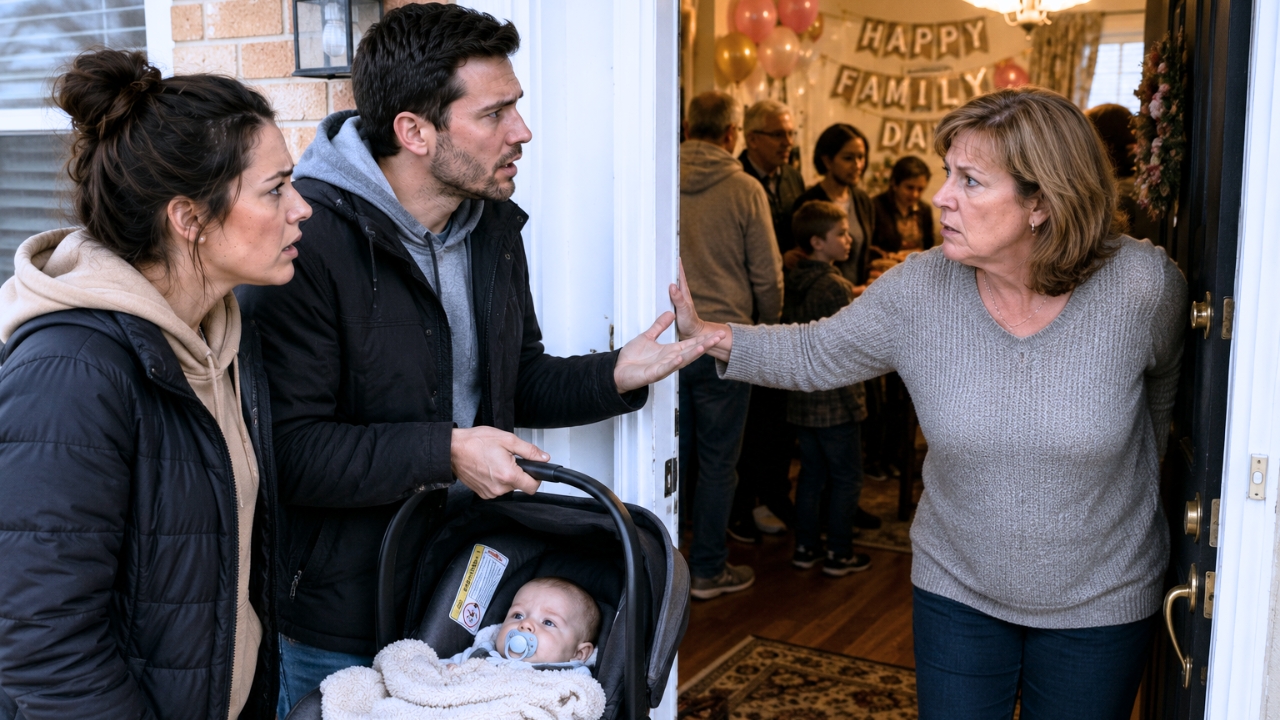
They drove over and expected it to be awkward, but quick. Instead, they arrived to cars lining both sides of the street, the kind of scene that makes neighbors peek through blinds. The father carried the empty car seat to the porch, trying to keep the situation calm and polite.
The grandmother opened the door halfway and blocked the entry with her body. She told them the baby was sleeping and accused them of being controlling. The mother said she didn’t care if the baby was asleep—she was taking her child home.
Voices rose inside. Someone called out that the parents were being dramatic. Another relative appeared behind the grandmother and tried to argue that the parents should “learn to share.” The baby started crying from somewhere deeper in the house, the kind of cry that makes a parent’s stomach flip instantly.
The father asked for the baby again, firmly. When the grandmother still didn’t move, he stepped off the porch and called the non-emergency line, explaining that they were being prevented from picking up their infant. He didn’t want officers storming a family gathering, but he also didn’t want the situation to become a tug-of-war at the door.
The practical fallout came fast
The grandmother relented before anyone arrived, but not gently. She handed the baby over with a tight smile, and the mother immediately noticed the baby smelled like perfume and had a damp patch on the back of the head, as if someone had wiped spit or frosting away in a hurry. The father checked the diaper and found it overfull, the kind that leaves red marks.
In the car, the baby fell asleep quickly, worn out. By that evening, the baby was congested and fussy, refusing a bottle. The next morning there was a low fever. The parents took the baby to urgent care, where they were told it looked like a viral infection and to monitor symptoms carefully.
That medical visit turned the conflict into paperwork. The parents saved the discharge notes, screenshots of the party photos, and the text thread where the grandmother insisted on the parents staying away. The father also wrote down a timeline, minute by minute, because he’d learned the hard way that family disputes get rewritten quickly when other relatives pick sides.
They also checked daycare policies and were told the baby might need to stay home until fever-free. That meant one of them would miss work. The mother had already used most of her time off for postpartum recovery and earlier daycare illnesses. Now they were staring at lost wages because someone else decided a crowded gathering mattered more than a baby’s routine and health.
Commenters zeroed in on documentation and access
People who heard the story focused less on the emotions and more on the risks. Many pointed out that if a relative is willing to exclude parents to stage a big “family” moment, that same relative might try something bigger later—like taking the baby for an overnight without permission, ignoring medical instructions, or refusing to return the child on time.
Others suggested practical steps: stop unsupervised visits, put boundaries in writing, and avoid handoffs at the door. Several recommended meeting in public spaces or only visiting at the parents’ home, where leaving is easier and the parents control who comes in. A few urged the couple to install a door camera in case the grandmother showed up unannounced and tried to pressure them on the porch the way she had pressured them at hers.
Some also brought up the importance of who has legal permission to pick the baby up from daycare, warning the parents to remove any relatives from authorized pickup lists. The father did it that same week, not because he expected a kidnapping scenario, but because he didn’t want to discover too late that someone felt entitled to make “family time” decisions for them.
By the following weekend, the fever had passed, but the tension hadn’t. The grandmother wanted another visit and framed the previous one as a misunderstanding, still insisting the parents were overreacting. The parents didn’t argue much anymore. They simply said visits would be with them present, on their schedule, and any surprise gatherings would end the visit immediately.
It wasn’t the dramatic blowup some relatives expected. It was quieter than that, and more permanent. The parents had learned that the biggest problem wasn’t a party or a photo—it was the idea that they could be written out of the room, and that their baby’s needs could be treated as optional. They weren’t willing to test how far that idea might go next.