His Mom Said the Baby Rules Were Too Strict — Then She Lost Her First Visit
By the time the baby was two weeks old, the new parents had already learned that sleep deprivation makes every decision feel like a referendum. They were running on nap scraps, healing, and trial-and-error routines when they sent a calm group text laying out what visiting would look like for the first month. It wasn’t dramatic—just specific, the way you get when you’re trying to keep a newborn healthy and a household functional.
The message covered basics: no drop-ins, schedule visits ahead of time, wash hands, skip the visit if you’ve been sick lately, and no kissing the baby. They also asked visitors to keep it short and to let them handle feeding and soothing. Most people replied with a thumbs-up or a quick “of course.” The baby’s grandmother replied with a paragraph about how “rules” were ruining what should be a joyful time.
The “rules” weren’t about control, they were about survival
The couple had written everything down because they were already getting pulled in different directions. One side of the family wanted to bring food and keep things quiet. The other side treated the new baby like a community event, suggesting a revolving door of visitors and “help” that sounded a lot like holding the baby while the parents did chores.
They also had a clear reason for being careful: the baby had been slightly underweight at the first pediatric appointment and the doctor had pushed them to limit exposure. That didn’t mean total isolation, but it did mean no crowded get-togethers and no surprise visits. The parents framed it as temporary, with a plan to loosen things after the next checkup.
The grandmother didn’t argue the health part directly. Instead she focused on tone, insisting the list was disrespectful and that she shouldn’t have to “ask permission” to see her grandchild. The parents offered a compromise: pick a day that weekend, come for an hour, and follow the basics. That’s when she stopped responding.
The first visit was scheduled — and immediately tested
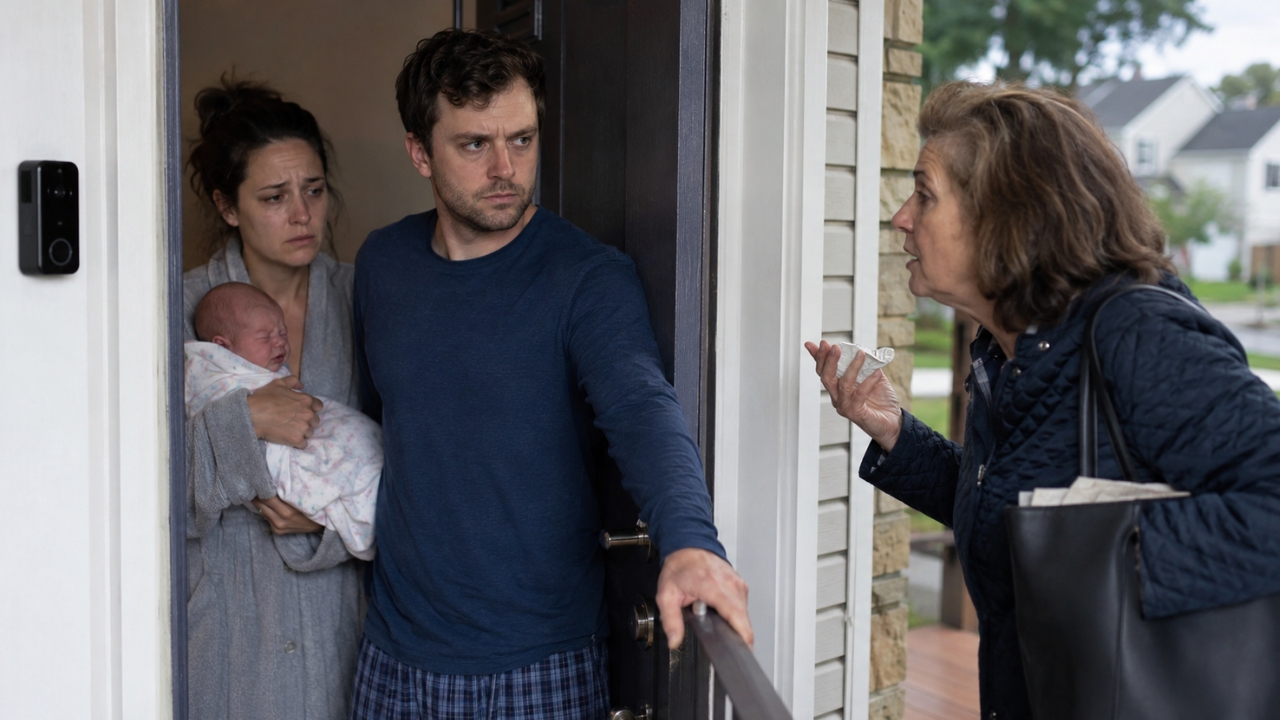
Two days later, the grandmother showed up anyway, earlier than the time the parents suggested and with a bag that looked like it came straight from a crowded store. She rang the bell repeatedly while the baby was finally sleeping, then knocked when no one answered fast enough. When the father opened the door, he saw she was sniffling and had a cough drop in her mouth.
He asked if she’d been sick. She brushed it off as allergies and stepped forward like she expected to be waved in. The mother, still sore and exhausted, asked her to reschedule if she had any symptoms at all. It turned into an argument on the porch, the kind that escalates because nobody wants the neighbors watching while they talk about germs and boundaries.
The grandmother tried to bargain: she would just “peek” at the baby, she’d keep her distance, she’d wash her hands. Then she went for the emotional angle, saying the parents were treating her like a stranger. When the father repeated the rule—no visits if you’re sick—she accused them of making her feel unwelcome and demanded to come in “just for a minute.”
It ended on the doorstep, and the boundary got real
The father closed the door after saying they’d call in a few days to reschedule. The grandmother didn’t leave. She stood on the walkway, calling through the door and sending rapid texts about how she had driven “all this way” and how the mother was being controlling. The baby startled awake, and the mother started crying in frustration, which only made the father more determined to end it.
When the grandmother started pounding the door again, the father opened it just enough to say that if she didn’t stop, he’d call for help. That was the moment it tipped from family conflict into something that felt like a safety issue. Neighbors were outside now, and one of them later messaged the father asking if everything was okay.
The grandmother finally walked back to her car, but not before she yelled that she wouldn’t be “kept away” from her grandchild. Minutes later, she sent another message saying she was coming back later “when you calm down.” The parents responded in writing: do not return today, and any future visit needs to be confirmed ahead of time. The grandmother replied that she wouldn’t be “taking appointments” to see family.
The couple documented everything and tightened the plan
That night, the father saved screenshots of the texts and wrote down a timeline while it was still fresh. They had a video doorbell, and it had captured the knocking, the porch argument, and the moment the grandmother refused to leave. It felt surreal to be saving footage of a grandparent like it was evidence, but the father didn’t want the story flipped later into “they wouldn’t let me see the baby for no reason.”
The next morning, the mother called the pediatric office to ask for guidance she could point to. The nurse reiterated that limiting contact and avoiding symptomatic visitors was standard, and suggested keeping visits short and calm. The couple decided their original “baby rules” weren’t strict enough if someone was willing to ignore them entirely.
They sent a final message: the first visit was canceled, and there would be no new visit scheduled until the grandmother apologized and agreed in writing to the basics. They also made it clear that showing up uninvited would mean no visit for a longer period. It was the kind of boundary people think they’ll never have to set—until someone forces it.
The fallout spread to other relatives fast
Within hours, other family members started reaching out, and not all of them were neutral. Some asked why the parents were being “so intense” and suggested the grandmother was just excited. Others had clearly heard a different version of events, one where the grandmother had been “turned away at the door” despite doing nothing wrong.
The parents kept their response simple and consistent. They told people the baby’s health came first, they weren’t accepting surprise visits, and they weren’t arguing about it. When pressed, the father offered to share the exact message thread showing she had symptoms and refused to leave. That offer alone changed the tone of a few conversations, because it signaled they weren’t bluffing and they had receipts.
A relative tried to mediate by proposing a “family meeting” to clear the air. The parents declined. With a newborn, they didn’t have the bandwidth for a debate about whether their house rules were “fair.” The only meeting they were willing to have was a scheduled visit—if the grandmother could follow the same expectations as everyone else.
Commenters would have focused on proof and safety, not winning the argument
In situations like this, the practical advice tends to sound cold but it’s often what keeps things from getting worse. People usually urge new parents to keep everything in writing, avoid porch confrontations, and stop answering the door if someone is escalating. The video doorbell, saved texts, and a written timeline are the kind of documentation that matters if a family dispute turns into harassment claims or repeated unwanted visits.
Others typically point out that “no kissing the baby” and “don’t visit while sick” aren’t personal attacks—they’re baseline newborn precautions. And if a relative treats a simple health boundary as negotiable, that’s a sign the real conflict isn’t about germs. It’s about control and access, which doesn’t improve when people are tired and emotional.
A few would also advise changing routines for a bit: keeping doors locked, not sharing exact appointment dates, and letting neighbors know not to buzz someone in. Not because a grandmother is a criminal, but because stressed people do unpredictable things, and new parents don’t need another surprise at the door.
By the end of the week, the grandmother still hadn’t apologized. She sent one more message saying she was “ready to come by” and asked what time would work, as if the earlier confrontation had never happened. The parents didn’t respond immediately. They were focused on feeding schedules, diaper counts, and the next weigh-in—because in their house, the baby’s needs were still the only rules that mattered.