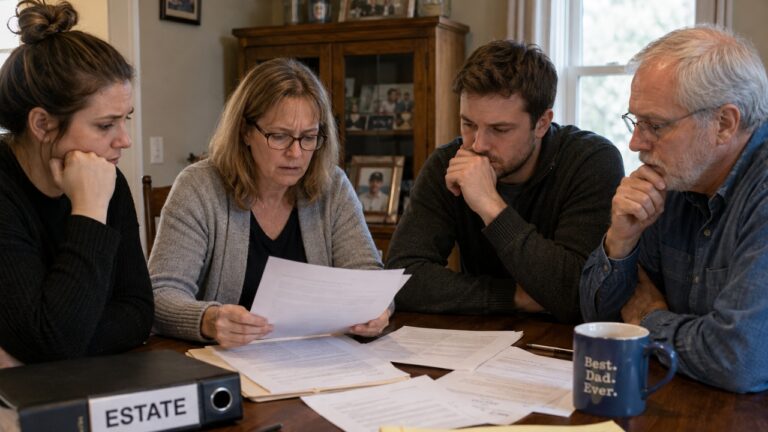
Grandma Bought a Nursery for a Baby Who Wouldn’t Be Staying There — Then the Parents Had To Set Her Straight

By the time the new crib arrived, the expecting couple thought it had to be a mistake. They hadn’t picked one out yet, and they definitely hadn’t shipped it to anyone else’s address. But there it was on the porch of the baby’s grandmother: a full-size crib, a changing table, a rocking chair, boxes of diapers, and a pale-colored mobile still in its packaging.
The grandmother had been talking for weeks about “getting ready,” but the parents assumed she meant stocking a few basics for short visits. Instead, she’d turned her spare room into a full nursery in a matter of days. And the problem wasn’t the effort or the money. It was the expectation underneath it: she was planning for the baby to stay overnight at her house—regularly—before the parents had ever agreed to that.
It started with excitement and quickly turned into an assumption
The couple had kept their pregnancy plans fairly low-key, telling close family after the first trimester. The grandmother responded with nonstop energy: sending links to strollers, asking about paint colors, and insisting she’d be “helping a lot.” The parents appreciated the enthusiasm, even if it came with a little pressure.
Then the comments shifted. The grandmother began referring to “the baby’s room” at her place, and she talked about how she’d handle nighttime feedings “when the baby is here.” When the parents gently corrected her—saying they weren’t planning overnights for a long time—she brushed it off like they were being modest.
A week later, she invited them over for dinner and guided them down the hallway like she had a reveal planned. That’s when they saw the nursery: a fresh coat of paint, blackout curtains, a white noise machine already plugged in, and a baby monitor sitting on the dresser as if it had a job to do.
The nursery came with strings attached
The grandmother didn’t present the nursery as a kind gesture. She presented it as a schedule. She talked about which nights she’d take the baby “so you two can sleep,” and she described holidays as if the baby would spend them at her house, too.
The parents tried to keep the conversation calm. They thanked her for caring, but they repeated their boundary: the baby would be living with them, and there wouldn’t be routine sleepovers. They also pointed out basic safety and comfort realities—newborn feeding schedules, postpartum recovery, and the fact that they wanted to learn their own rhythm as a family.
That’s when the tone changed. The grandmother became visibly offended and insisted she’d “already spent the money,” as if the purchases were a contract. The parents heard the message clearly: she believed buying the nursery earned her access.
A disagreement turned into a control battle
Over the next couple of weeks, the grandmother doubled down in subtle ways. She asked for a house key “for emergencies,” then requested to be added to the list at the hospital. She also asked for the parents’ work schedules and talked about picking the baby up “once daycare starts,” despite the parents not having picked a daycare.
What made it harder was how she framed it to other relatives. Family members began reaching out with gentle pressure—reminding the couple that “she’s just excited” and that “it’s so helpful to have support.” The parents weren’t rejecting help; they were rejecting a plan they hadn’t agreed to.
The final push came when the grandmother started buying duplicates of items the parents had already purchased for their own home, then demanded a list of what else she “still needed.” When the parents refused, she sent a long message outlining how many nights she expected the baby to stay with her, down to which weekends she’d have “her time.”
That message was the moment the parents stopped treating it like an emotional misunderstanding and started treating it like a boundary problem that could escalate.
The parents put everything in writing
Instead of arguing over the phone, the couple wrote a single, clear response. They thanked her for the gifts, said they hadn’t asked for a nursery, and stated plainly that the baby would not be doing overnights and would not be transported anywhere without a parent’s permission.
They also made it about safety and routine, not blame. No debates about her intentions, no rehashing old family drama. Just expectations: visits would be scheduled, the parents would be present, and any attempt to take the baby or pressure them would result in reduced contact.
At the same time, they started documenting the interactions that worried them. They saved messages, kept a running list of incidents, and decided that if anything escalated—like showing up uninvited or refusing to leave—they would treat it as a serious situation, not a “family disagreement.”
They also quietly adjusted their own logistics: changing delivery preferences for baby registry items, limiting who got appointment details, and tightening privacy settings on social media so updates couldn’t be screenshotted and shared widely.
The blowup had real-world consequences
The grandmother reacted badly to being told no. She threatened to return everything and demanded repayment for the nursery supplies. When the parents didn’t engage, she escalated to guilt, then anger, then bargaining.
At one point, she showed up at their home with a car seat still in its box and insisted it stay in her vehicle “for when I pick the baby up.” The parents refused to bring it inside and asked her to leave. When she didn’t, the couple’s neighbor—hearing the raised voices—stepped outside, which finally pushed the grandmother to back off.
After that, the parents took extra precautions. They installed a doorbell camera and asked their building manager to note that no one besides the parents should be allowed access to their unit. They also discussed a plan for the hospital: a password for information, a limited visitor list, and clear instructions to staff not to allow surprise guests.
The nursery itself became a strange symbol. It sat finished and untouched, waiting for a baby who wasn’t coming to live there. The grandmother kept sending photos of it, as if the visual would wear them down.
People focused on proof, safety, and not negotiating under pressure
Those who heard about the situation zeroed in on the same practical points. First: gifts aren’t agreements. Buying something expensive doesn’t create parental rights, and it’s not the recipient’s job to pay for someone else’s assumptions.
Second: keep everything in writing. Commenters tended to encourage saving texts and voicemails, not because anyone wanted a legal fight, but because patterns matter if behavior crosses into harassment or boundary violations.
Third: lock down the logistics early. That meant controlling who gets medical information, who has keys, and who has access to childcare arrangements. Several people also pointed out that once a routine is established—like weekly sleepovers—it can be harder to unwind without a bigger family blowup.
Finally: don’t let “help” become leverage. Many framed it as a common trap for new parents, especially during postpartum exhaustion, when the temptation to accept any assistance is high even if it comes with conditions.
In the end, the parents didn’t try to punish the grandmother or make a dramatic statement. They just refused to participate in a plan they didn’t create. The nursery remained in her house, perfectly set up for a version of grandparenthood she wanted—while the real relationship would depend on whether she could accept the one the parents were actually offering.