New Parents Refused Visitors After the Hospital — Then the Family Group Chat Turned Against Them
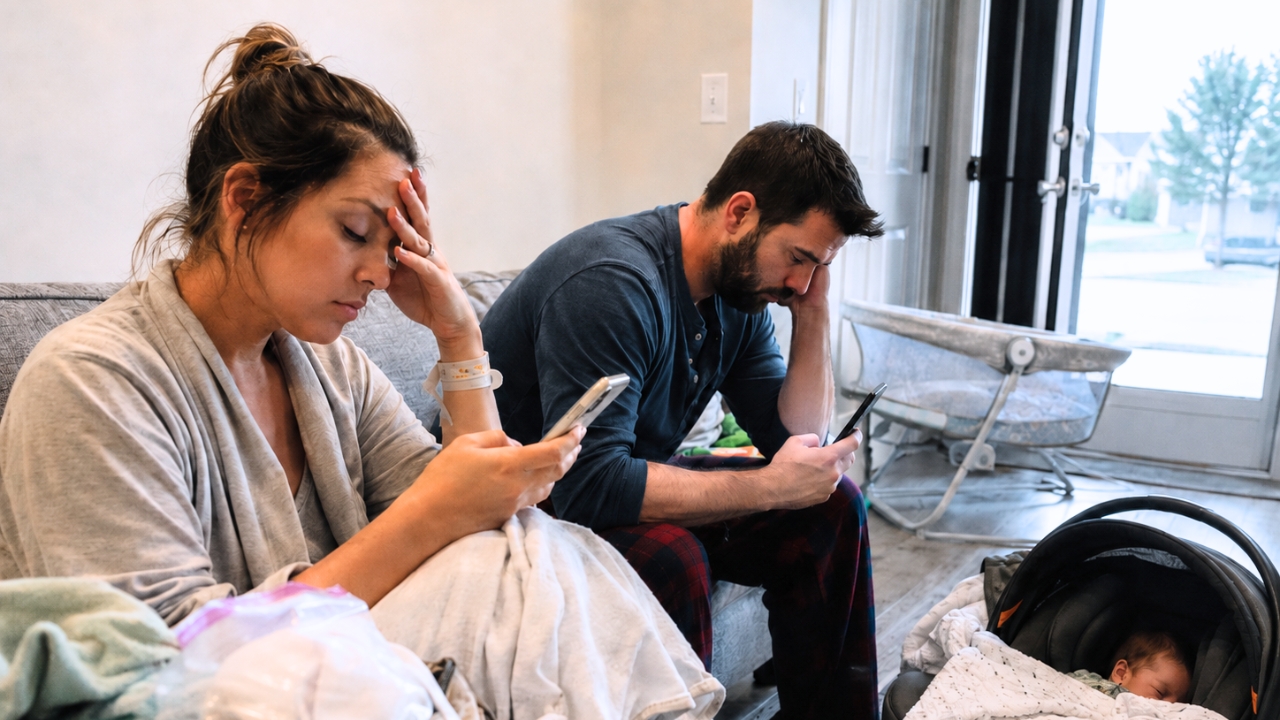
By the time they pulled into their driveway, the new parents had been awake for nearly two days. The car seat was installed, the discharge papers were in a folder, and the plan was simple: get the baby inside, lock the door, and take a breath.
They’d already sent a message to both sides of the family: no visitors for two weeks, no exceptions. It wasn’t meant to punish anyone. They wanted time to recover, learn the routine, and keep the usual swirl of germs away from a newborn while the mom healed from a rough delivery.
That boundary lasted less than an hour before the phones started lighting up.
The “just stopping by” texts started before they unpacked
The first ping came from the dad’s mother asking what time she should come over. He replied with the same wording they’d agreed on together: they’d let everyone know when they were ready, and until then they weren’t hosting.
Within minutes, it became a negotiation. The replies shifted from excited to wounded, then to irritated. The grandma offered to “only stay a minute,” then suggested she could wait in the living room while the parents napped, then asked for the garage code so she could drop off food without disturbing them.
When they said no again, she called instead of texting. They let it go to voicemail, trying not to wake the baby who had finally fallen asleep in the bassinet. That’s when the dad’s phone vibrated with a group chat notification he hadn’t seen in months: the extended family thread.
The group chat turned the boundary into a public argument
The messages started as updates, then quickly became a running commentary on the couple’s decision. An aunt posted that new parents “need support, not isolation.” A cousin chimed in about how “we all showed up for each other,” followed by a stream of thumbs-up reactions.
It didn’t stay abstract for long. Someone asked if the mom was “having postpartum issues,” and another suggested the dad was being controlled. The parents were tagged directly, over and over, as relatives took turns suggesting compromises that still involved coming over.
The mom, exhausted and sore, tried to keep it calm. She wrote that they appreciated the love but needed rest and privacy, and they would schedule short visits once they had a routine. That message got a few heart reactions and then disappeared under a flood of criticism about being “ungrateful.”
The turning point came when a relative posted a photo from outside their house—taken from the street—captioned like proof that they were home and “ignoring everyone.”
Then the boundary became a safety issue, not just hurt feelings
That evening, the doorbell camera caught the dad’s mother on the porch with two plastic grocery bags and a car idling at the curb. The baby had just finished feeding, and the mom was trying to settle him back down. They didn’t answer.
The grandma stayed anyway, pressing the bell again after a minute and trying the doorknob. When it didn’t open, she leaned toward the window, peering in. The dad asked her through the intercom to leave the bags and go. She walked the food to the mat, then didn’t leave for another ten minutes.
It happened again the next day, this time with the dad’s sister. She knocked harder, then texted the group chat that she could hear movement inside and that “they’re clearly fine.” A neighbor later mentioned seeing two cars parked awkwardly in front of their mailbox and someone pacing at the end of the driveway like they were waiting for permission to approach.
The parents didn’t want a neighborhood scene, but they also didn’t want an unannounced crowd. They started keeping the blinds closed and silencing their phones during naps. The dad took time off work, but instead of bonding quietly, he was checking the camera feed and deciding whether to confront relatives in real time.
The practical fallout hit fast: work, neighbors, and documentation
When the dad finally responded in the group chat—briefly, politely, and firmly—he was met with a wall of messages accusing him of keeping the family away from “their” baby. Someone suggested they would just coordinate with the neighbor to see when the couple was outside. Another relative claimed it was “suspicious” they wouldn’t let anyone in.
The mom’s side of the family stayed quieter, but the tension spread there too. Her mother called to ask if everything was okay, not because she doubted her daughter, but because she’d been sent screenshots implying the couple was unstable.
That’s when the parents stopped treating it like a feelings problem and started treating it like a boundary enforcement problem. The dad saved screenshots. He exported the doorbell clips showing repeated uninvited visits and the doorknob attempt. They put a simple sign on the door asking for no visitors without confirmation and taped a note to the bottom: “Please do not knock. Baby sleeping.”
The neighbors weren’t thrilled about the repeated parking and the doorbell ringing either. One mentioned that their own dog had been barking every time a relative came up the walkway. Another said, gently, that if people kept trying handles in the neighborhood, someone might call it in.
After the third uninvited visit, the dad called the non-emergency line for advice. He didn’t ask for anyone to be arrested. He wanted a record in case it escalated, and he wanted to know what counted as trespassing in their area. The dispatcher told him to document every incident and call again if someone refused to leave when asked.
Commenters focused on keeping it boring and enforceable
When the situation got retold in private messages and parenting groups, the most common reaction wasn’t outrage. It was strategy. People urged the couple to stop arguing in the family thread and move everything to one simple statement they could repeat without emotion.
Others suggested tightening the logistics: keep doors locked at all times, disable the outdoor chime if possible, and use the camera intercom instead of opening the door. Some recommended sending food-drop instructions that didn’t involve contact—leave it at the porch at a certain time, no knocking, then text a photo and go.
A lot of people emphasized documentation. Save every screenshot, every timestamped clip, every voicemail. Not because they wanted the couple to blow up the family, but because once relatives start testing boundaries, it’s easier to hold the line with receipts than with explanations.
There were also warnings about escalation. If someone is trying doorknobs now, commenters said, they might try to “catch” the parents in the yard later. A few recommended talking to the neighbor closest to the driveway and asking them to call if they see anyone lingering.
The hardest part was that the family wanted a vote, not an invitation
The dad eventually muted the group chat entirely. The mom blocked a few numbers for a week just so she could sleep without jumping at every buzz. But the silence didn’t fix the underlying problem: some relatives weren’t treating the baby as a person the parents were protecting, but as a family asset everyone had immediate access to.
In the days that followed, the grandma sent a long message framing the boundary as disrespect. The sister demanded a timeline for visits and asked to “see proof” the mom’s doctor recommended no visitors. Another relative offered to come “help clean” as if chores were the real issue.
The couple drafted a final response they could live with: they would schedule short visits after the pediatrician appointment, they would require handwashing, and they would end any visit the moment someone argued. They sent it individually to key family members instead of throwing it into the group thread for debate.
For now, the house is quieter. The parents are still tired, still adjusting, and still watching the porch camera more than they ever expected. The tension hasn’t vanished, but the boundary is no longer theoretical. It’s locked doors, saved clips, and a new understanding that sometimes the first lesson of parenthood is learning who respects “no” when you say it the first time.