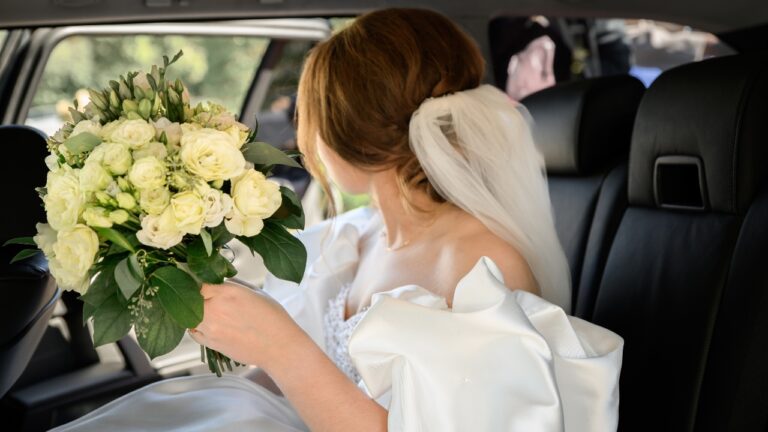
Bride Asked Her Mom Not To Share Wedding Details Online — Then the Post Went Up Anyway

Two days after she mailed the last batch of invitations, the bride opened her phone to a flood of messages she didn’t understand at first. A coworker congratulated her on the venue, a distant cousin asked about parking, and an old classmate she hadn’t spoken to in years wanted to know if kids were welcome. The problem was simple: she hadn’t told any of those people the venue yet.
She clicked into social media and found it immediately. Her mom had posted a bright, proud update with the wedding date, the ceremony location, and a photo of the invitation suite spread across the kitchen table. It even included a shot of a handwritten envelope with the couple’s return address partially visible. The bride had asked for one thing: don’t share wedding details online.
She thought the boundary was clear, and the reasons weren’t dramatic
The bride and her fiancé weren’t trying to be secretive for fun. They were keeping details off public pages because they were juggling a few real concerns: an ex who had shown up uninvited at a friend’s event before, a small guest list that would invite pressure from extended family, and vendors who had warned them about “wedding crashers” in their area.
Her mom had been excited from the moment the date was set, and the bride expected some over-the-top enthusiasm. So she sent a calm text early on: no posting the date, no venue name, and no photos of invitations. She explained that she’d share pictures after the ceremony and that any updates could go in private group chats, not a public feed.
According to the bride, her mom replied with a thumbs-up and said she understood. That made the post feel less like a mistake and more like a decision.
The post didn’t just share information — it created a chain reaction
The first consequence was the guest list pressure. Within an hour, relatives the bride hadn’t planned to invite started messaging her directly, saying they’d “just seen the announcement.” A few asked if they could bring plus-ones. One aunt sent a screenshot of the post and asked if the couple could “make room” for her neighbors because they were “good people.”
Then came the practical problems. The venue manager emailed to confirm the couple’s security plan, referencing calls they’d received about “the big wedding this weekend.” The bride hadn’t even sent final numbers yet, and now strangers seemed to know the place and date.
The bride also realized her mom’s post revealed more than she intended. One photo showed a seating chart draft on the counter in the background. Another angle caught the top of a contract with the venue’s name. It wasn’t a full doxxing, but it was enough that someone motivated could connect the dots quickly.
When she asked her mom to take it down, the excuses kept shifting
The bride called her mom and asked her to remove the post. At first, her mom said it was harmless because her account was “mostly friends.” When the bride pointed out that friends share posts and that some of her mom’s contacts were basically strangers from old jobs and community groups, her mom switched to saying she didn’t think the bride was serious about the request.
Then came the defensive version: the bride was being controlling, and a mother should be allowed to celebrate. The bride tried to keep it simple and repeated the original boundary: this isn’t about her mom’s excitement; it’s about safety and control over who gets details.
Her mom offered to “edit” the post rather than delete it, which turned into a drawn-out back-and-forth about what counted as identifying information. The bride watched the caption get shortened, but the venue tag remained. A relative had already shared it to their own page, and the information kept spreading even after the original post changed.
The situation became bigger than etiquette once vendors and logistics got involved
By the next day, the couple was making contingency plans. They called the venue to ask about entry procedures, and the coordinator suggested assigning someone to check names at the door and keeping a printed guest list with a point person who could say no firmly. That was an extra task and, depending on the staffing, possibly an extra fee.
They also contacted their photographer to request that no real-time location tags be used and that previews wait until after the reception. The bride asked her wedding party not to post any “countdown” photos with identifiable backgrounds. It felt like trying to put a lid back on something that had already boiled over.
The most stressful piece was the interpersonal part. The bride worried that confronting her mom too hard would spiral into a family blowup right before the wedding. But not confronting it meant accepting that someone else could override a boundary with minimal consequences.
At one point, the fiancé suggested a compromise: if the mom couldn’t stop sharing details publicly, she could get updates last. It wasn’t meant as punishment, more like a practical safety policy. The bride hesitated because she knew it would be taken personally, but she also saw how quickly one post had turned into a logistical scramble.
Commenters zeroed in on screenshots, privacy settings, and getting ahead of the next post
People following the story homed in on proof and damage control. The first recommendation was to screenshot everything immediately, including edits, timestamps, tags, and the list of shares. Not because the bride needed to sue her mom, but because once posts are deleted, family members tend to argue about what was or wasn’t said.
Others suggested reporting the post if it showed personal information like an address, and messaging anyone who reshared it with a direct request to remove it. Several pointed out that “friends only” doesn’t mean safe, especially when someone’s friend list includes acquaintances, former coworkers, and people from local groups who might not have the couple’s best interests in mind.
Another common angle was prevention. People urged the bride to stop sending her mom photos or documents that could be posted again, to use a password with vendors, and to ask the venue about signage and check-in procedures. A few recommended assigning one calm, firm family member to intercept the mom’s phone during key moments, like when the bride is getting ready, to prevent another impulsive upload.
Some went further and talked about consequences: if the mom couldn’t respect a basic request now, she might not respect boundaries during the ceremony or reception either. That translated into advice like having the officiant announce an unplugged ceremony, asking staff to discourage aisle photos, and telling the DJ not to make shout-outs that reveal private details.
The hardest part was deciding what to do about her mom, not the internet
The bride could handle the vendor calls, the extra planning, and the awkward messages from extended family. What she couldn’t easily solve was the feeling that her mom had chosen public attention over her daughter’s comfort. Even after the post finally came down, the damage was in the spread: shares, screenshots, and the sense that her wedding had become community news before she was ready.
In the days leading up to the ceremony, the bride shifted to a stricter information diet. Her mom got fewer details, and anything time-sensitive went to a small group chat with the wedding party instead. The bride also asked the venue to keep doors monitored and to stick to the guest list, even if someone claimed they “knew the mother of the bride.”
They didn’t cancel the wedding or change the venue, but the tone changed. What should have been an excited countdown turned into a quiet effort to keep the event contained and safe. And even if the day went smoothly, the bride knew the bigger issue wouldn’t disappear when the last song ended: trust, once strained over something this avoidable, is hard to rebuild on a tight timeline.