Aunt Shared the Baby Announcement First — Then the New Mom Removed Her From the Group Chat
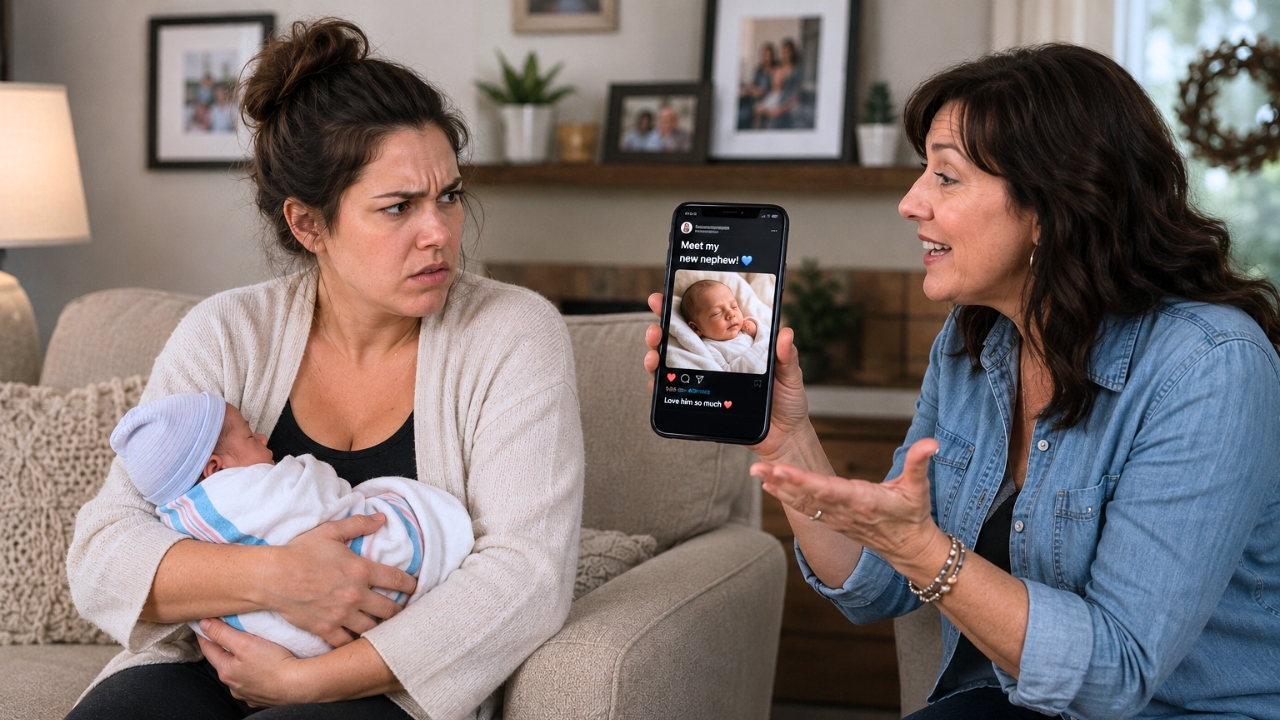
The new mom thought she was doing everything the careful way. She and her partner had waited until the baby arrived safely, then shared a simple photo in a private family group chat—tiny hand, hospital bracelet, first name, and a short message asking everyone to keep it off social media until they had a chance to tell close friends themselves.
Within an hour, the phone started buzzing. Coworkers. Old classmates. A distant cousin. People who weren’t in the chat were sending congratulations, complete with screenshots of a post the new mom hadn’t made.
A private update turned public in minutes
The aunt, excited and impatient, had posted the baby announcement first. It wasn’t just a vague “welcome to the world” message either. It included the baby’s full name, the birth date, and a photo that still had the hospital’s branding visible in the corner.
The new parents were still in that fragile first-day haze—sleep deprived, learning feeds, and trying to keep visitors limited. Instead of enjoying the quiet, they were now fielding messages and managing relatives who felt entitled to “stop by for a quick hello” since the news was out.
When the new mom asked her aunt to take it down, the response wasn’t an apology. It was a defense: she was “just proud,” she “didn’t tag anyone,” and she “didn’t think it mattered.” The post stayed up long enough to be shared and screenshot by multiple people.
The removal from the chat wasn’t just about feelings
By the next morning, the new mom removed her aunt from the family group chat. It wasn’t done with a dramatic announcement, just a quiet click while the baby slept on her chest.
In the new mom’s mind, it was a basic boundary. If someone couldn’t respect a simple request—especially around a newborn—then they didn’t get access to real-time updates, photos, or details. The group chat wasn’t a public relations tool. It was where the parents shared medical updates, scheduling plans, and who could visit and when.
The aunt noticed quickly. She texted asking why she couldn’t see the new photos. When the new mom explained, the aunt insisted she’d been “punished” for being happy and accused the new mom of being controlling during a “special family moment.”
Then the aunt tried to work around the boundary
Once she was out of the chat, the aunt started messaging other relatives directly. She asked them to forward photos. She hinted that the new mom was “keeping the baby from the family.” A few relatives complied, screenshotting pictures from the group chat and sending them along, sometimes without even thinking about it.
That’s when the situation shifted from a single bad choice to an ongoing problem. The new mom realized she wasn’t just dealing with one person who posted too soon. She was dealing with a network of people who didn’t take privacy seriously.
There were practical consequences, too. The baby’s name wasn’t common, and a quick search brought up the aunt’s post. The new parents had chosen not to share the baby’s full name online at all, at least not yet. Seeing it floating around with a clear birth date made the new mom uneasy in a way she couldn’t shake.
The conflict spilled into visits, gifts, and money
When the parents got home from the hospital, they tried to reset expectations. They asked visitors not to take pictures, or if they did, to keep them off social media. They also asked people to text before coming by, because the baby’s feeding schedule was unpredictable and the new mom was recovering.
The aunt didn’t take those rules well. She showed up with a gift bag and wanted a photo “for her friends.” When she was told no, she acted hurt and suggested the new mom was being rude. The visit became tense enough that the partner stepped in and ended it early.
In the days after, the aunt leaned on the family’s older generation, complaining that she’d spent money on baby items and was now being “cut out.” That framing worked on a few people. The new mom started receiving messages about how she should “keep the peace” and how “that’s just how she is.”
But the new mom’s side of it stayed consistent: being excited didn’t outweigh the parents’ right to choose what information gets shared and when. She also didn’t want to spend postpartum recovery playing defense on her own baby’s identity and photos.
Commenters focused on receipts, privacy settings, and a tighter circle
People following the story zeroed in on how fast a single post can travel, and how hard it is to pull back once it’s out. The most practical advice was to document everything—screenshots of the original post, timestamps of the requests to remove it, and any messages where relatives admitted they were forwarding photos.
Another common suggestion was to lock down the flow of information. If someone can’t respect privacy, they don’t get access to the source. That meant narrowing the group chat, watermarking photos shared privately, and giving only limited updates to relatives who were likely to pass things along.
Others recommended treating baby photos like any other sensitive data: check social media privacy settings, ask close friends not to repost even “cute” screenshots, and consider using an invite-only photo app with download restrictions. A few people also pointed out that hospital identifiers in photos can reveal more than families realize, especially when combined with a unique name.
The hardest part was navigating family pressure without backing down
The aunt didn’t stop at complaining. She tried to pressure the new mom through guilt, then through other relatives, and finally by acting like nothing had happened. She sent “good morning” texts and asked for new pictures as if the boundary had never been set.
The new mom, exhausted and trying to heal, found herself rehearsing the same line: the issue wasn’t excitement, it was trust. She told relatives that if they wanted updates, they had to agree not to share them. If they couldn’t agree, they’d get occasional, general news—nothing searchable, nothing identifiable, and no real-time photos.
What remains unresolved is whether the family will accept that the parents control the baby’s digital footprint. For now, the new mom’s stance has held: the aunt can be part of the baby’s life, but not at the cost of privacy. And the group chat, once a cozy place for support, has become a reminder that not everyone treats personal news like it’s personal.