Her Mom Treated the Grandkids Like Free Help — Until Their Mother Finally Said No
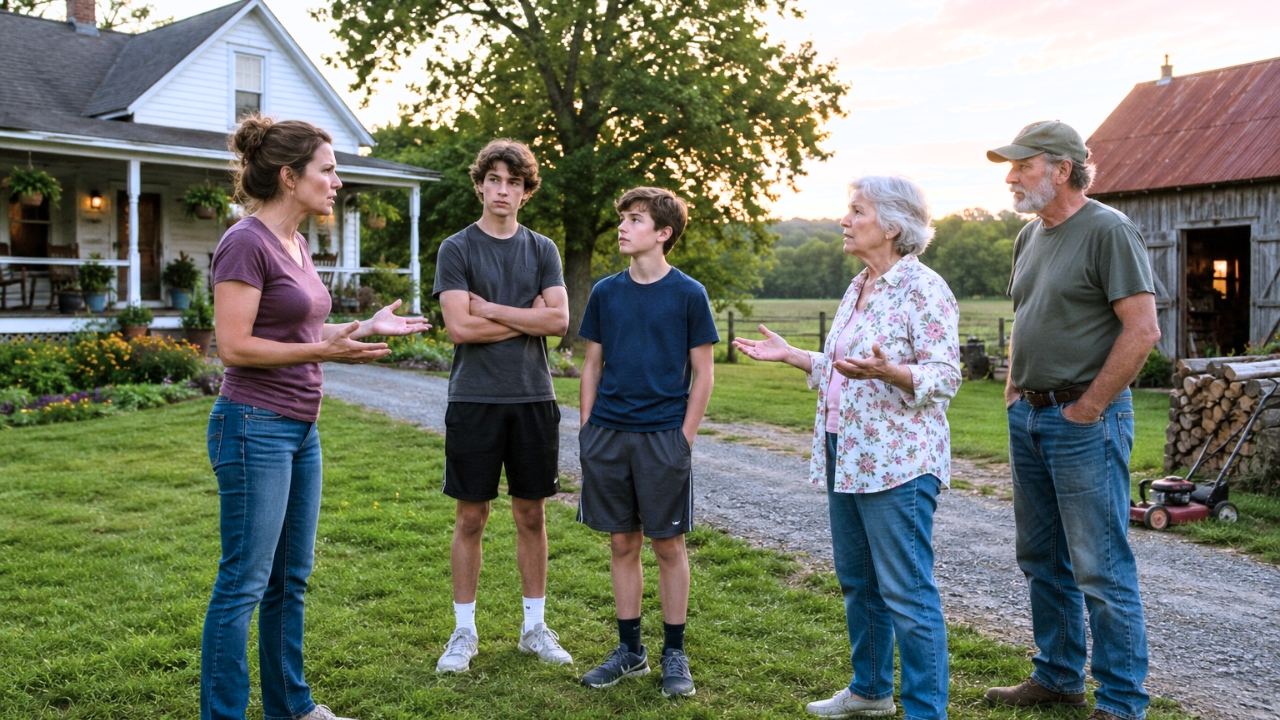
Photo credit: Thrivegirly
A 45-year-old mother said she finally pushed back after her own mom kept asking for her teenage sons to come over and do hours of unpaid physical work on the family property.
The woman shared the situation on Reddit, explaining that she has two boys, ages 15 and 13. Her boundary with her mother did not come from nowhere. It came from her own childhood, where she said she was “severely parentified” and treated like the family’s built-in labor.
Growing up, the poster said her mother was under enormous pressure. Her father was abusive, left her mother with debt, and her mother sometimes worked multiple jobs to survive. The poster understood that some of what happened came from desperation. But understanding the circumstances did not erase what it cost her.
Then her mother remarried a man the poster called Bob. According to the poster, Bob contributed money to the household but did very little around the house. That left the poster spending her preteen and teen years doing far more than a child should have been expected to do.
She said she was “voluntold” to babysit for neighbors. When her step-siblings visited, Bob would leave as soon as she got home from school so she would be forced to watch them. She said she also had to go to Bob’s fast-food workplace and wash dishes for hours without pay so he could keep labor costs down.
At home, she cooked most of the dinners, handled housework, and was held responsible if her brother did not do his chores. She said she never got an allowance for all that labor, and if someone offered to pay her, the adults declined on her behalf, claiming it “built character.”
When she left for college, that pattern finally stopped.
The poster said she made herself a promise: she would never do that to her own kids.
Now her sons are teenagers, and her mother has divorced Bob and remarried a man named Kyle. The poster described Kyle as wonderful, both to her mother and to the grandchildren. She said her mother has reached a better season of life after two bad marriages and a rough history.
But one old expectation has not gone away.
According to the poster, her mother still believes younger people should do whatever work she wants done. She frequently tells the poster to bring the boys over to split wood, mow the field, clean the house, or handle other physical work on the farm where she and Kyle live with three dogs.
The poster said she does help when there is a real need, like when her mother or Kyle has been sick or in the hospital. She is not against helping family. But she does not want her sons sent over repeatedly during the summer to do hours of hard labor for free.
When the requests kept coming, she finally told her mother that her children are not her free labor crew.
She explained that she does not mind the boys doing a few helpful things during visits. That is part of being family. But she would not send them out to the farm a few times a week all summer so her mother could use them for physical labor she did not want to pay for.
The woman shared the full situation in a Reddit post titled “AITA for telling my mother that my children are not her free labor”: https://www.reddit.com/r/AITAH/comments/1l78kpt/aita_for_telling_my_mother_that_my_children_are/
The poster said her mother is in her mid-60s and does have some physical limitations. She also said money is a factor. Her mother and Kyle are retired, not wealthy, and live on land that requires upkeep. Kyle has health issues, and the poster expects that when he eventually passes, her mother will likely sell the farm and move somewhere easier to manage.
So the poster does understand the practical problem.
But the attitude bothers her.
She said her mother acts entitled to the boys’ labor, talking as if the work “won’t hurt them” and as if they “need” to come help. The poster disagrees. Her sons are not farmhands. They are teenagers with their own time, and if they do real work, she wants them to understand their worth.
In fact, the poster said she pays her sons herself when they go over and do work for her mother because she does not want them growing up thinking unpaid labor is automatically owed just because an older relative asks.
That line matters to her because she lived the opposite. She knows what it feels like to be the family workhorse. She knows what it does to a child to be praised for being “helpful” while adults quietly rely on that child to carry responsibilities they should not have to carry.
The poster also gave more context about her mother’s past. She said her mother had an extremely rough upbringing and has been the caretaker for many relatives over the years. Her mother has buried siblings, cared for older family members, and spent much of her life helping others. The poster wondered if part of her mother’s expectation comes from a feeling of, “I help everyone, so why won’t someone help me?”
That made the situation emotionally complicated. The poster did not paint her mother as a villain. She described her as someone with a damaged sense of what is normal because of generations of hardship.
But the poster also knows that sympathy cannot become permission.
Her mother may have been conditioned to believe family labor is just what people owe each other. The poster is trying to break that pattern before it reaches her sons.
The conflict was not about whether teenagers should ever help grandparents. The poster was clear that occasional help is fine. The problem was turning the boys into an unpaid summer maintenance crew while calling it family duty.
For the poster, saying no was not disrespectful. It was parenting. She was protecting her sons from a cycle she had worked hard to leave behind.
Commenters strongly sided with the poster and said she was right to protect her sons.
Many said the difference between helping and being used is important. Splitting a little wood during a family visit or helping after an illness is one thing. Being expected to show up repeatedly for hours of unpaid labor is something else entirely.
Several commenters focused on the poster’s childhood. They said she had been forced into adult responsibilities far too young, and it made sense that she was sensitive to the same pattern appearing with her own children. To them, she was not overreacting. She was stopping the cycle.
Others said her mother needed to hire help, downsize, or rethink whether the farm was manageable. Commenters understood that money may be tight, but they said that still did not make the grandchildren responsible for maintaining the property.
Some people liked that the poster pays her sons when they do work. They said it teaches the boys that helping others is good, but their time and labor still have value. Others suggested that if her mother wants the boys to work, she should be the one paying them.
A few commenters were more compassionate toward the mother because of her difficult history. They said people who grow up in harsh environments sometimes normalize things that were never healthy. But even those commenters generally agreed that the poster did not have to let that pattern continue with her kids.
The strongest advice was to keep the boundary firm and simple. The boys can visit their grandmother. They can be kind. They can help occasionally. But they do not belong to her as unpaid labor.
By the end of the discussion, the message was clear: breaking a family cycle often starts with one parent saying, “Not my kids.”