Woman Wanted to Take Over Her Own Funeral Planning — Then Her Family’s Control Became Impossible to Ignore
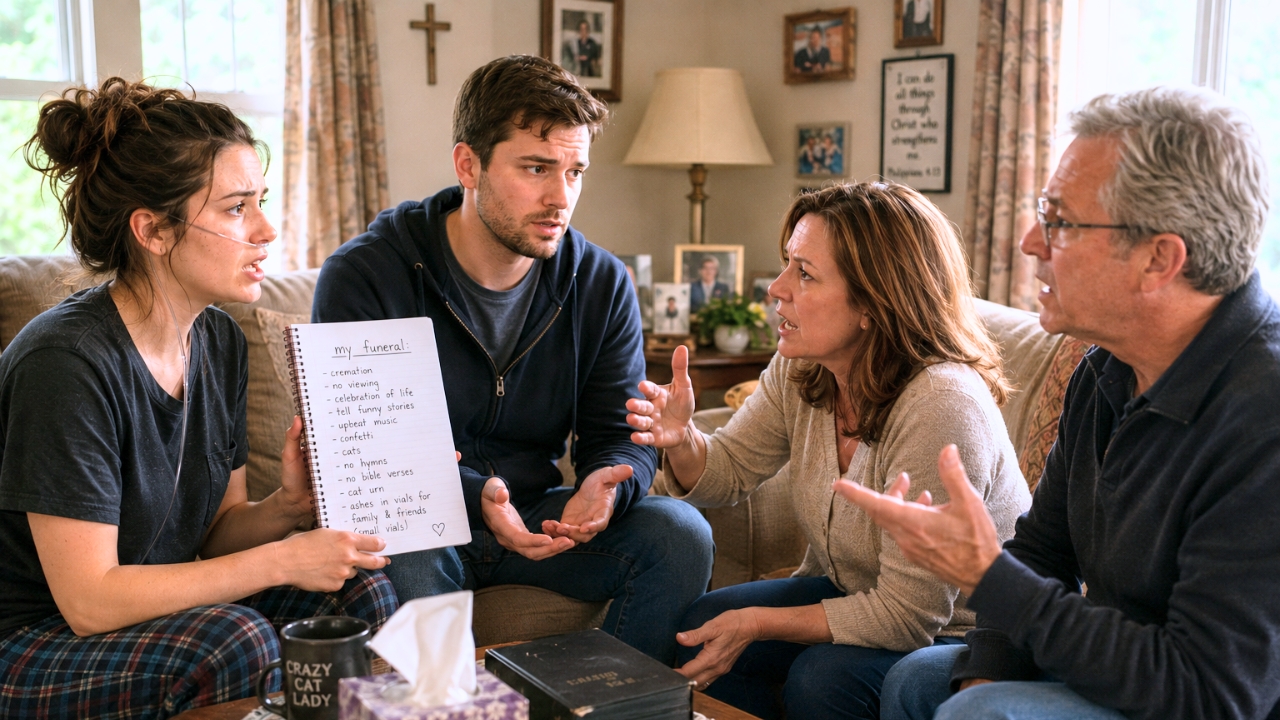
A 25-year-old woman who knew she was dying said she had expected planning her own funeral to feel like a strange kind of relief.
Instead, it became another fight.
She had cystic fibrosis, and after two rejected lung transplants, doctors told her there was nothing else they could do except keep her comfortable. She had only a few weeks left. That meant she and her husband were forced into conversations most people hope they never have to face so young: end-of-life care, memorial plans, burial or cremation, and what kind of goodbye would reflect the life she had actually lived.
Her parents had very clear ideas.
They were strict Southern Baptists and wanted a traditional religious funeral. Hymns, prayers, Scripture readings, a casket, a viewing, a graveside service — the kind of memorial that made sense to them and their beliefs. To them, this was how a funeral should be done.
But to their daughter, it felt completely wrong.
She was not religious. She described herself as the opposite of what her parents valued in that way. She wanted the service to sound like her, not like the daughter her parents may have wished she had become. She wanted laughter, funny stories, photos, upbeat music, cats, confetti, and a little irreverence. She wanted to be cremated and placed in a cat-shaped urn. She even joked about her ashes being handed out in small vials to close family and friends so they could take her with them, because she loved to travel.
That image horrified her husband a little, but it was deeply her.
According to the Reddit post, her parents had already started pushing the traditional plans hard. They wanted to take her shopping for a casket, pick out flowers, choose hymns, and settle on Bible verses. She had tried to compromise, but they were not really meeting her halfway.
The situation put her husband in a terrible position too.
He wanted her funeral to be exactly what she wanted, but he also knew that after she died, he would be the one left grieving while her parents were still upset. He did not want to spend the first days after losing his wife fighting with her family over every detail.
That was part of why she considered taking formal control.
She asked whether she would be wrong to write everything down legally and make sure her funeral followed her wishes. She understood her parents were grieving. She understood that funerals are for the living in many ways. But she also believed the living should remember the person who actually died, not turn the service into a version of that person that made everyone else more comfortable.
That was the heart of it.
She was not all the things her parents wanted her to be. She loved them, but she did not want her final goodbye rewritten into something that erased her personality, humor, and beliefs. She wanted her loved ones to cry, laugh, remember, and recognize her in the service.
Commenters flooded the post with support. Many told her to put everything in writing immediately and make sure her husband had the legal authority to follow her wishes. They also urged her to spend her remaining time doing what she wanted, not trying to manage everyone else’s grief.
She later updated through her husband after she died.
Before her death, she had talked with her parents. A lot. The conversations were painful, but they led somewhere. Her parents admitted that her approaching death had shaken their faith, and in trying to regain control, they had tried to “guide” her into the afterlife in the way that made sense to them.
She explained that she was not them. She was their daughter, and she wanted peace in her final weeks, not a funeral fight consuming what time she had left.
Somehow, they reached a compromise.
There were tears, hugs, and laughter. Her parents still were not on board with every idea, especially the ashes-as-party-favors plan, but they came closer to understanding that the funeral needed to reflect who she had been. She left behind a final note to Reddit, written by her before she died, thanking people for helping her find the words and confidence to stand up for herself.
The note was funny, tender, and blunt in the same breath. It sounded exactly like the person she had been trying to preserve in the funeral plans.
That was what made the ending so bittersweet. She did not get more time. She did not get the long life she deserved. But she did get to be heard. Her parents, at least in some way, finally saw that planning her funeral as a traditional religious service was not honoring her if it left out everything that made her herself.
Her final request was not really about confetti or cats or a funny urn, though all of that mattered because it mattered to her. It was about being remembered honestly.
Commenters were deeply moved by the woman’s post and overwhelmingly supported her right to plan her own funeral. Many said that if she had the strength to think about what she wanted, her family should respect it.
A lot of readers pushed back on the idea that funerals are only for the living. They said funerals may help loved ones grieve, but they should still reflect the actual person who died.
Several commenters had practical advice: put everything in writing, make sure her husband had legal authority, and remove as much decision-making pressure from him as possible before the time came.
After the update, the comment section turned emotional. Readers were heartbroken that she had died, but glad she had reached some peace with her parents and left behind words that sounded so clearly like her. The strongest reaction was that her final goodbye should never have been about who her parents wanted her to be. It should have been about the woman she actually was.