Wanted Criminal Broke Through the Shared Wall — Then the Apartment Complex Still Wouldn’t Let Her Move
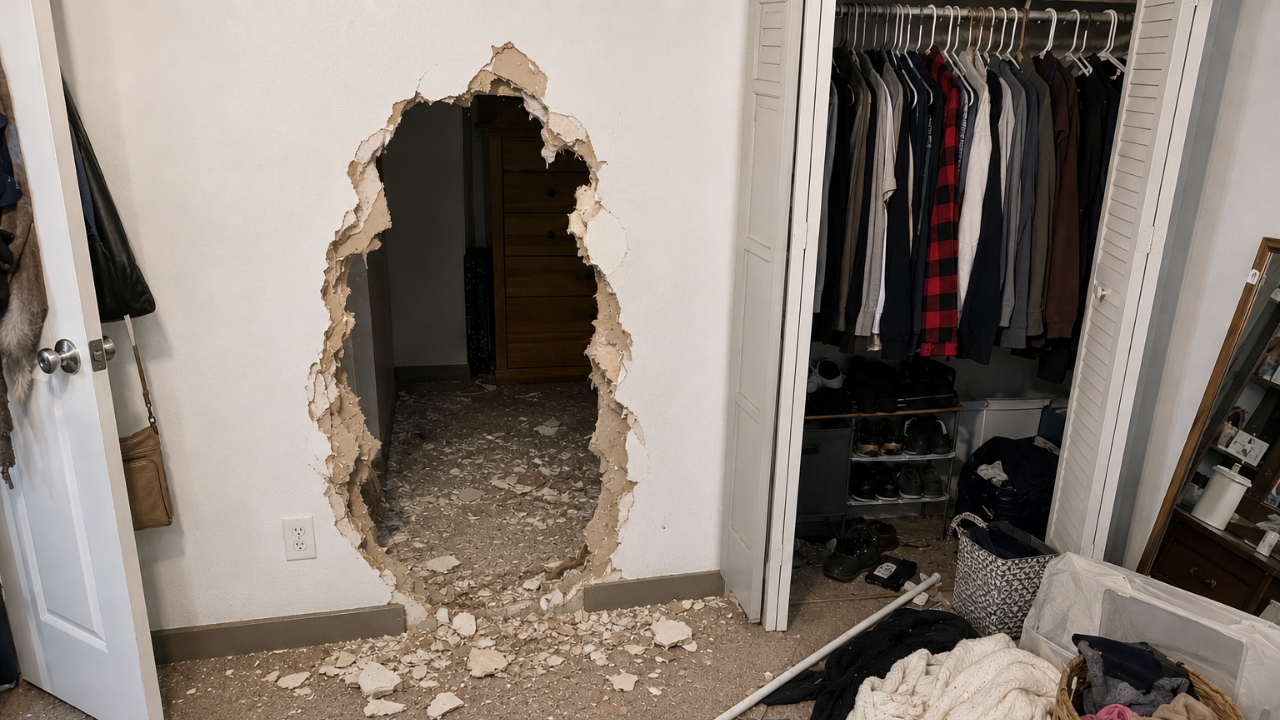
Photo credit: Thrivegirly
An Indiana renter says she was at work when a Blink camera alert showed a stranger walking around inside her apartment.
At first, she did not know what she was seeing.
She explained in a Reddit post that she did not have a camera angle showing how the man had entered. All she could see was a stranger moving freely through her home, looking through cabinets, closets, and belongings.
In the shock of the moment, her first thought was that maybe it was a maintenance worker.
That assumption may sound strange from the outside, but it made sense in the confusion. Apartment complexes sometimes send maintenance in for emergencies. If a camera catches someone inside and you are not there, the mind tries to find the least terrifying explanation first.
So instead of calling 911 immediately, she called the property manager.
That call became one of the most frustrating parts of the entire ordeal.
According to the renter, the property manager told her they were aware someone was inside her apartment and that everything was fine. They claimed they had sent someone to her unit to “do repairs on the patio.”
That did not add up.
The renter had no patio issues. She had not submitted a maintenance request. She had not received notice that anyone would be entering her apartment. She told the manager all of that.
The manager brushed it off and said they had called the renter’s mother and gotten permission to enter after the renter did not answer.
That was impossible.
The renter lives alone. She had never given management her mother’s information. She had not been contacted about patio repairs.
The property manager had confused her with another resident.
Meanwhile, there was still a stranger in her apartment.
The renter told the manager the man was not on the patio. He was inside her apartment, going through closets and cabinets. Management told her they would “go check on it” and discouraged her from calling 911.
About 30 minutes later, they called her back.
This time, the story had changed. It was a burglary. The man had been arrested. She needed to come home immediately.
When she got there, the situation was even worse than a normal break-in.
The intruder had been hiding in her neighbor’s apartment because the neighbor was allegedly harboring a wanted criminal. When police came to serve a warrant, the man broke a hole through the shared wall between the two apartments to escape into her unit.
He did not just enter. He damaged the wall, ransacked her home, and stole clothing to make a disguise.
He also cut himself badly while climbing through the wall, leaving blood throughout the apartment. According to the renter, the neighbor who had sheltered him disclosed that the man had AIDS, which created a biohazard issue in the unit.
Property management deemed the apartment uninhabitable until it could be professionally cleaned and inspected. The renter was displaced for about a week, staying first with family and then in a hotel she had previously booked for an unrelated trip.
The cleanup created even more loss.
The crew disposed of various belongings, mostly clothing, but did not take an inventory of what was thrown away. She only figured out what was gone later, when she was finally allowed back in and saw what was missing.
She eventually received a check from the property’s insurance to cover the value of the stolen clothing she was not allowed to keep. She also used crowdfunding to replace other lost or damaged items.
But the financial part did not fix the safety part.
The neighbor was not evicted.
That detail haunted her. She said property management cited the neighbor’s six-year, incident-free tenancy and his payment toward the repairs and cleaning as reasons for not removing him. She still saw non-residents coming and going from his unit, some appearing to have their own keys.
That left her living beside the apartment where a wanted man had allegedly been sheltered before breaking through her wall.
She said she struggled to sleep after moving back in. The thought that someone could come through the wall again messed with her for weeks and still bothered her.
She wanted to move, but property management would not let her break the lease without paying the normal fees, which would cost thousands of dollars on top of moving expenses.
That became the core legal question. She was not only asking about compensation for stolen belongings. She wanted to know whether she had any legal path to get out of the lease, recover costs, or hold someone responsible for the way management handled the emergency.
Her biggest frustration was that property management’s misinformation may have delayed the police response. If she had called 911 immediately when the camera alert came in, the intruder may have had less time to go through her home and cause more damage. Instead, management told her they knew about it, misidentified her, claimed false permission from a mother she never listed, and told her they would handle it.
The renter later said she did talk extensively with police after getting home. She gave them her account, identified her belongings, provided serial numbers, received a report number, and got a victim-rights packet. She also received a probable cause affidavit.
That paperwork helped prove the story was real, which she said mattered because the whole thing sounded almost too wild to believe.
But even with police records and local news coverage, she was still stuck next door to the neighbor whose guest had broken through her wall.
The crime ended in an arrest.
The fear did not.
Commenters generally agreed the situation was horrifying, but they were divided on what legal options she realistically had.
Several said any compensation would likely come from the criminal himself, though the renter noted he was an unemployed career criminal and unlikely to have money worth pursuing.
Others suggested speaking with a lawyer about the neighbor, especially if he knowingly harbored a wanted person who then damaged her apartment and belongings. A few said she should contact the district attorney’s office to ask whether the neighbor might face charges too.
Many commenters were frustrated with property management but warned that proving liability could be hard, especially because the manager’s misinformation happened verbally. The renter said she had proof of the phone calls occurring during the break-in, but no recording of what was said.
A lot of people focused on getting out. Even if the legal case was messy, commenters said her safety and mental health mattered and encouraged her to talk with an attorney about moving first and pursuing costs later.
The clearest advice was simple: preserve every report, affidavit, insurance record, repair record, phone log, and message. If she wanted a lease break or damages, documentation would be the only thing stronger than the nightmare itself.