
7 facts about Paul that make his letters easier to understand
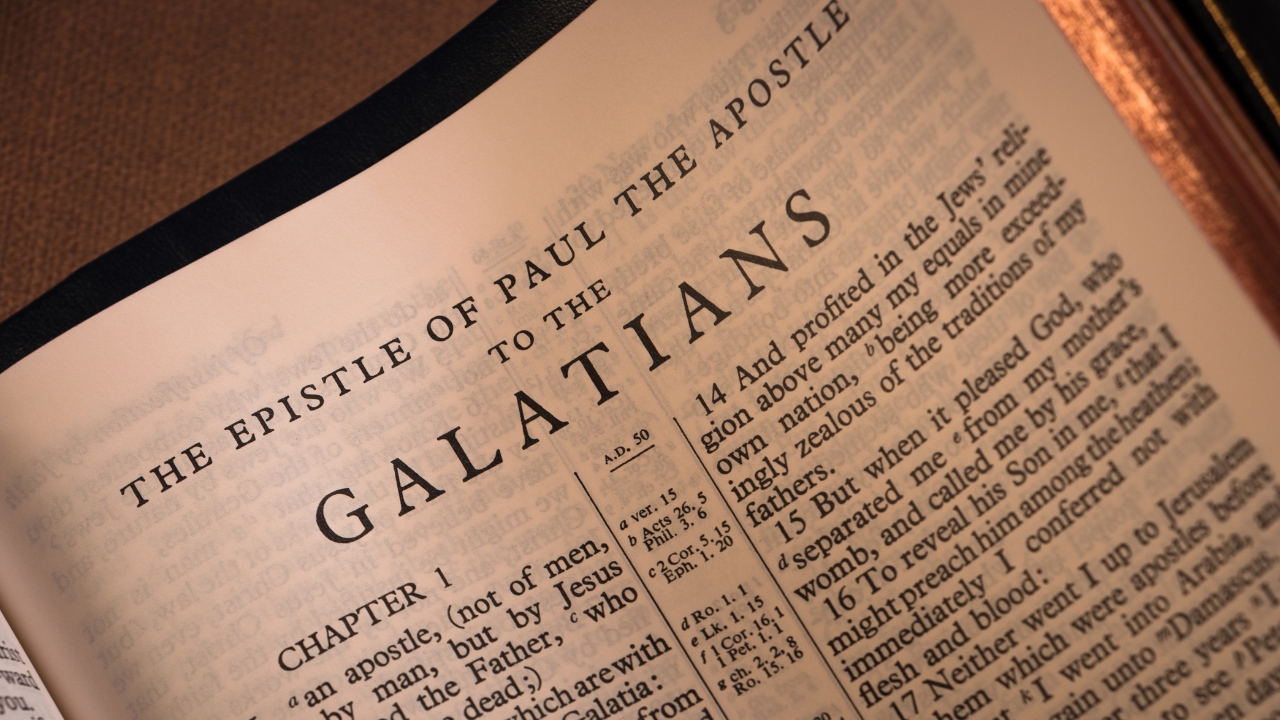
Photo credit: joshimerbin/Shutterstock.com
Paul’s letters can feel incredibly rich and incredibly dense at the same time. A lot of Christians love Romans, Philippians, Galatians, or Corinthians, but still come away thinking, I know this is important, but I am not sure I fully get why he says things the way he does. That is normal. Paul was not writing vague inspirational notes. He was writing real letters to real churches in the middle of real problems, and he was doing it as a Jewish apostle living in the Roman world. Once you know a little more about who Paul was and the world he moved through, his letters start to feel a lot easier to follow.
That is one reason context helps so much with Paul. You do not need to know every scholarly debate to understand him better. Sometimes a few key facts change the feel of whole passages. His background, his audience, his work, his travel, and his conflict all shaped the way he wrote. These seven facts are some of the biggest ones.
1. Paul was a Greek-speaking Jew, not a detached outsider to Judaism
One of the most important things to understand is that Paul was thoroughly Jewish. Britannica describes him as a Greek-speaking Jew from Tarsus in Cilicia who had belonged to the Pharisees before becoming a follower of Christ. That means Paul was not writing against Judaism as though he had never belonged to it. He knew Israel’s Scriptures deeply, cared about covenant questions, and thought from inside the world of Jewish belief.
That changes how you read his letters. When Paul talks about Abraham, the law, circumcision, promise, Israel, resurrection, and righteousness, he is not making up a brand-new religious vocabulary from scratch. He is arguing from inside the story of Israel and insisting that the story reaches its fulfillment in Christ. If you forget that, Paul can sound like he is rejecting the Old Testament. If you remember it, he starts sounding more like a man convinced that Jesus is the key to what Israel’s Scriptures were always driving toward.
2. Paul had been a Pharisee, which explains why law and tradition matter so much in his letters
Britannica says that until about the midpoint of his life Paul was a member of the Pharisees and notes that Pharisees cared deeply about life after death, traditions, and careful study of Scripture. Paul himself refers to his former zeal and expertise in tradition. That helps explain why his letters are so full of scriptural argument, careful theological reasoning, and strong concern about what obedience to God really means.
This matters because Paul is not a sloppy thinker reacting emotionally to his past. He is a man trained to argue carefully from Scripture. When he writes Galatians, for example, you can feel how intensely he cares about what counts as covenant identity and faithfulness before God. His arguments about the law are not coming from ignorance of it. They are coming from someone who knew it, prized it, and became convinced that Christ had changed how it must now be understood.
3. Paul supported himself through manual work, which helps explain his tone
Britannica says Paul learned to work with his own hands and identifies his trade as tent making or leatherworking. It also notes that he sometimes emphasized the fact that he worked with his own hands. That detail matters more than it may seem at first. Paul was not simply writing as a distant religious lecturer supported by a quiet study somewhere. He knew ordinary labor, travel, and the practical strain of supporting himself while carrying out ministry.
That helps explain some of the texture of his letters. When Paul talks about labor, weakness, endurance, hunger, hardship, and refusing to be a burden, those are not empty dramatic touches. He knew what it was to work and minister in costly ways. It also helps explain why he can speak so directly to ordinary Christians. He is not floating above daily life. He is writing as someone who has lived in the middle of it.
4. Paul was writing to churches in the Roman world, not to one generic Christian audience
Britannica notes that Paul was active as a missionary in the 40s and 50s of the first century and that his letters were written to specific congregations, including places like Thessalonica, Corinth, Philippi, Galatia, and Rome. That means Paul’s letters are not arranged around one neat textbook plan. They are deeply shaped by the actual communities receiving them.
This is one of the biggest keys to reading Paul better. Corinthians feels different from Philippians because Corinth and Philippi were different churches with different problems. Galatians feels sharper because Paul is fighting for the truth of the gospel in a crisis. Philippians feels warmer because of his affection for that church, even though he writes from prison. Once you remember these are real letters to real churches, Paul starts to feel less abstract and much easier to follow.
5. Not all thirteen New Testament letters attributed to Paul are viewed the same way
Britannica says that of the thirteen New Testament books attributed to Paul, seven are generally accepted as fully authentic, while others are often described as Deutero-Pauline or Trito-Pauline by scholars. It names Romans, 1 Corinthians, 2 Corinthians, Galatians, Philippians, 1 Thessalonians, and Philemon as the seven undoubted letters.
For ordinary believers, this does not mean you have to panic every time you open Ephesians or Timothy. It does mean it is helpful to know that scholars talk about Paul’s letters in different categories and that this is part of serious New Testament study. More importantly for reading, those seven widely accepted letters give you the clearest direct window into Paul’s voice, ministry, concerns, and theology. They are often the best place to start if you want to understand Paul himself more clearly.
6. Paul wrote out of conflict, pressure, and suffering
A lot of readers imagine Paul writing calm theological summaries from peaceful settings. But Britannica notes that Paul had many enemies and detractors in his own day, spent time imprisoned, and likely died as a martyr in Rome. It also describes his missionary life as one full of struggle to establish his authority and continue his work. Philippians especially reflects this, since Britannica says it was written while Paul was in prison, probably in Rome or Ephesus.
That changes the feel of his letters. Paul is not theorizing suffering from a distance. When he writes about joy in hardship, endurance, weakness, opposition, and hope, he means it. When he defends his apostleship, he is not being petty. He is often protecting the gospel and the churches he loves in the middle of very real conflict. Knowing that makes his urgency, tenderness, and sharpness easier to understand.
7. Paul thought constantly in light of Christ’s death and resurrection
Britannica notes that Paul’s surviving letters are the best source for his thought and shows how central Christ’s death, resurrection, and present lordship are across them. Even in Philippians, Britannica highlights Paul’s focus on Christ’s humility, death, and exaltation. Paul does not treat Jesus as one religious topic among many. Christ is the center that reorganizes everything: Scripture, salvation, mission, suffering, identity, and future hope.
That is probably the biggest reason his letters read the way they do. Paul keeps coming back to union with Christ, the cross, the resurrection, the Spirit, and the coming future because he believes history itself has turned on Jesus. Once you see that, even Paul’s harder arguments start making more sense. He is not trying to win abstract debates. He is trying to help churches understand what life looks like now that Jesus Christ has died, risen, and been exalted as Lord.
Why this helps so much with Paul
Paul can feel intimidating when you first read him, but a lot of that intimidation starts to ease once you remember who he actually was. He was a Jewish Pharisee turned apostle, a manual laborer, a missionary in the Roman world, a man shaped by Scripture, conflict, suffering, and a blazing conviction that Jesus changed everything. He was writing real letters to real churches, not abstract essays to future readers.
That is why context matters so much here. It does not make Paul smaller. It makes him clearer. And usually, once he starts feeling clearer, his letters start opening up in a whole new way.