
9 archaeological discoveries that make the Bible feel more real
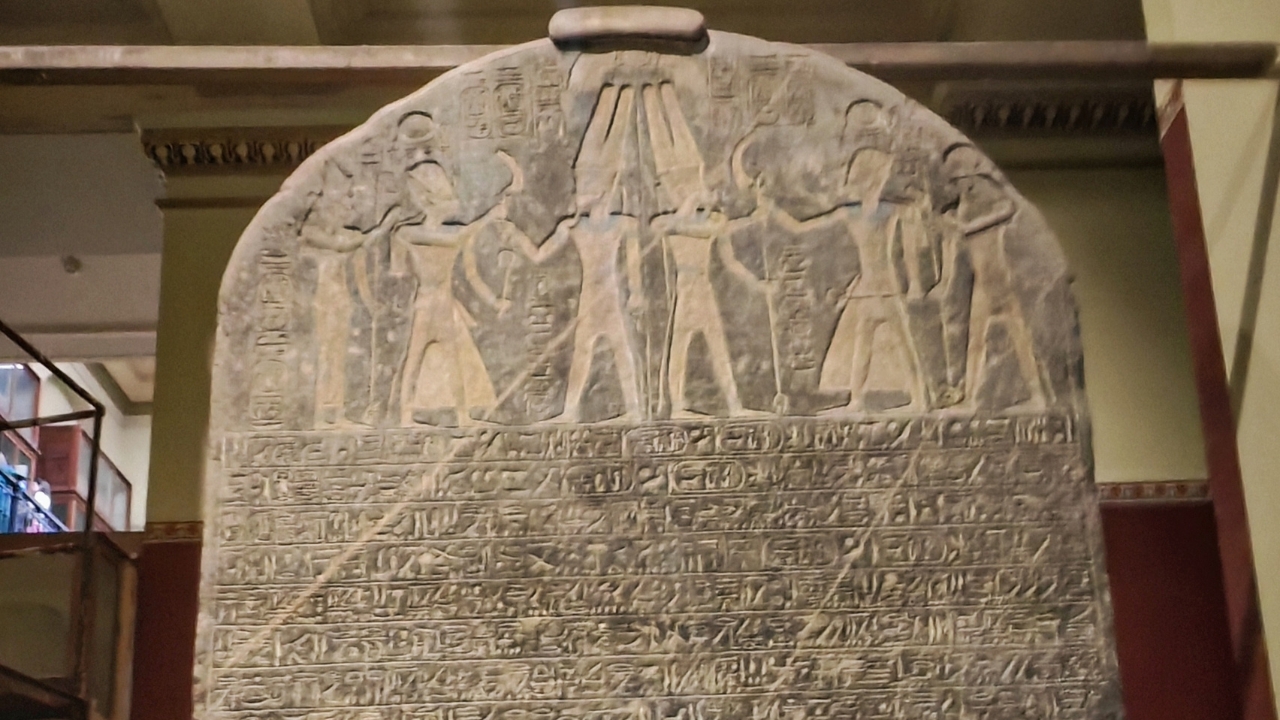
Photo credit: Jordan Rodriguez/Youtube
One of the things that helps many believers read the Bible with more confidence is realizing how often Scripture touches the real, physical world. The Bible is not written like a vague spiritual book floating above history. It is full of named rulers, real cities, public buildings, water systems, dynasties, and people whose world left traces behind. Archaeology cannot prove every miracle or settle every theological question, but it can do something meaningful. It can show that the Bible keeps landing in the same world the dirt keeps uncovering.
That matters for Christians because faith is not helped by fluff. If we are going to point other believers toward confidence in Scripture, we should be careful, honest, and specific. We do not need to overclaim. We can simply say this: again and again, archaeology has uncovered people, places, and details that fit the biblical world in ways that make the text feel more concrete, not less. These nine discoveries are some of the best examples.
1. The Tel Dan inscription mentions the “House of David”
For a long time, some critics argued that King David may have been more legend than history. Then excavators at Tel Dan uncovered a broken Aramaic stele from the ninth century BCE that includes a phrase widely read as “House of David.” The Israel Museum describes it as the earliest reference to the Davidic dynasty outside the Bible, which is why the find caused so much attention. The point is not that the inscription retells David’s whole life. It does not. But it does place David’s royal line in the wider historical record instead of leaving it only inside Scripture.
That makes this discovery especially valuable because it touches one of the Bible’s central royal figures. The Old Testament does not present David as a floating moral symbol. It presents him as a real king whose dynasty mattered. The Tel Dan inscription fits that picture. It does not answer every question about David’s reign, but it does push back hard against the idea that the Davidic line was invented much later out of religious imagination.
2. The Pilate stone confirms Pontius Pilate by name and title
The Gospels place Jesus’ trial and crucifixion under Pontius Pilate, and that detail matters because it roots the passion narratives in Roman administration, not in legend. In Caesarea Maritima, archaeologists found a Latin dedicatory inscription that mentions Pontius Pilate and identifies him with the governing office in Judea. The Israel Museum lists it as a dedicatory inscription mentioning Pontius Pilate, and the Brown University inscriptions project preserves the inscription record from Caesarea.
This is one of those examples where the detail is small but powerful. Pilate is not just a character inside the Gospel story. He appears in a surviving first-century inscription from the Roman world of Judea. That supports the way the Gospels frame Jesus’ death inside a specific political setting. Christians do not need to exaggerate what the stone proves. It does not prove the resurrection. But it does show that the Gospel writers were placing Jesus in a real world governed by real Roman officials.
3. The Siloam inscription preserves the story of a real tunnel project
Second Kings 20:20 says Hezekiah made “the pool and the conduit and brought water into the city.” One of the most vivid archaeological discoveries connected to that world is the Siloam inscription, carved into the tunnel wall and now held by the Israel Museum in replica form. The inscription describes the dramatic moment when two teams tunneling from opposite directions finally met in the middle. It is not a vague memorial. It reads like workers celebrating the breakthrough point of a difficult engineering job.
That makes the biblical account of Jerusalem’s water preparations feel strikingly tangible. This is not just “some old tunnel” Christians like to mention because it sounds biblical. It is a known water project from the right general period, paired with an inscription that captures the work itself. When you read about Hezekiah and Jerusalem’s defenses, the story stops feeling flat and starts feeling located in a city with real rock, real pressure, and real engineering under threat.
4. The Dead Sea Scrolls show the Old Testament was copied far earlier than many people realize
The Dead Sea Scrolls are one of the most important manuscript discoveries in the modern era. Found in caves near Qumran between 1947 and 1956, they include the oldest known copies of biblical texts, along with many other Jewish writings from the Second Temple period. The Israel Museum emphasizes that these scrolls include the oldest known biblical manuscripts in existence.
Why does that matter for ordinary believers? Because it helps with trust in the transmission of Scripture. Before the scrolls were discovered, the oldest complete Hebrew manuscripts were much later than the time the Old Testament books were originally written. The Dead Sea Scrolls pushed our manuscript evidence much closer to the biblical world itself. They did not reveal a completely different Old Testament. Instead, they showed substantial continuity in the text while also giving scholars a clearer view of textual history. That does not remove every textual question, but it strongly supports the idea that the Hebrew Bible was transmitted with remarkable care.
5. The Merneptah Stele preserves one of the earliest references to Israel
The Merneptah Stele is an Egyptian inscription from the late thirteenth century BCE, and it is famous because it contains what most scholars recognize as the earliest extra-biblical reference to Israel. That matters because it places “Israel” inside the wider ancient Near Eastern record, not only inside the Bible’s own telling of its past.
This does not prove every detail of the Exodus or conquest narratives by itself, and Christians should not say it does. But it does matter because it shows that Israel was known as a people in the ancient world at a very early date. For readers of the Old Testament, that is significant. Scripture presents Israel as a real people with a real place in history, and this Egyptian inscription fits that broader picture rather than contradicting it.
6. The Mesha Stele overlaps with the world of Kings
The Mesha Stele, also called the Moabite Stone, is another major inscription from the ninth century BCE. It comes from the Moabite king Mesha and describes his revolt against Israelite rule. That already makes it important for Bible readers, because Mesha appears in 2 Kings 3. The Louvre’s Bible-and-ancient-world material presents the Mesha Stele as a major direct witness to the biblical world, and the inscription itself speaks about Moab’s relationship to Israel and the house of Omri.
This is a great example of why archaeology matters for context as much as for confirmation. The Mesha Stele does not simply echo the Bible word for word. It gives the Moabite side of a regional power struggle. That is exactly the sort of thing real history does. Different sources remember the same world from different perspectives. For Christians, that is useful because it shows the Bible belongs to a broader historical landscape full of neighboring kingdoms, conflicts, and rival claims.
7. The Caiaphas ossuary makes the high-priestly world of the Gospels feel closer
The Gospels name Caiaphas as the high priest involved in the trial proceedings against Jesus. In 1990, an ossuary was discovered in a Jerusalem burial cave bearing an inscription connected to the Caiaphas family. Scholarly and museum-style summaries note that one member of this family served as high priest during the time of Jesus’ public ministry and death.
This is one of those finds that helps the New Testament feel less distant. The trial scenes in the Gospels are not happening in a fog. They unfold inside the very real priestly and burial culture of first-century Judea. The ossuary does not tell the Gospel story by itself, but it helps place one of its key figures inside the material world of Jerusalem in that period. For many believers, that kind of connection helps the New Testament stop feeling abstract and start feeling inhabited.
8. The Pool of Siloam puts John 9 into a physical setting
John 9 tells the story of Jesus sending a blind man to wash in the Pool of Siloam. For a long time, many visitors saw a later commemorative pool in Jerusalem, but excavations in the early 2000s brought renewed attention to a much earlier pool from the Second Temple period. That matters because it places the John 9 narrative inside a real ritual and urban setting tied to Jerusalem pilgrimage life.
This kind of discovery may not feel as dramatic as an inscription with a famous name on it, but it is still valuable. The Gospels often mention places in passing because the writers assume the setting is real and knowable. Finds like the Pool of Siloam help modern readers recover that sense of place. They remind us that Jesus’ ministry happened in a physical Jerusalem with streets, pools, crowds, and routines that can still be studied.
9. Repeated discoveries keep showing the Bible knows its world
Sometimes the strongest argument is not one headline-making artifact but the cumulative effect of many finds. A dynasty inscription here, a governor’s dedication there, a tunnel text, a known pool, ancient manuscripts, neighboring kings, and priestly burial customs all start adding up. The Bible keeps sounding like a book that knows the world it is talking about. That does not mean archaeology has answered every question Christians ask, but it does mean the Bible repeatedly proves itself rooted in real places, real conflicts, and real historical memory.
For believers, that cumulative effect matters. It encourages careful reading instead of shallow reading. It reminds us that Scripture is not asking us to trust a book detached from history. Again and again, the biblical world turns out to be a world archaeology can actually touch. That does not replace faith, but it does support it in a meaningful way.
Why this helps Christians read the Bible better
The goal of articles like this should not be to make believers smug or argumentative. It should be to help them read the Bible with more confidence, more care, and more wonder. Archaeology is most useful when it makes Scripture feel more grounded, not when it gets turned into a pile of exaggerated talking points.
That is why these discoveries matter. They help Christians picture the Bible as what it actually is: God’s Word given through real people in the middle of real history. And when that starts sinking in, the Bible often becomes easier to trust and more exciting to study.